

How AppLovin’s Axon Uses Machine Learning to Predict Mobile Ad Performance
How AppLovin’s Axon Uses Machine Learning to Predict Mobile Ad Performance
Axon is AppLovin’s machine learning based platform designed to optimize mobile ad performance through predictive bidding, real-time creative rotation, and privacy-safe targeting. Built on a Mixture of Experts (MoE) architecture, Axon adapts to user behavior and continuously learns from live campaign data to improve ROAS and retention.
Why Axon Matters
Most ad platforms use terms like “automation” and “optimization,” but few explain how their systems actually make decisions. Axon is different. It functions as the core decision engine behind AppLovin’s ad platform — built to predict behavior, rotate creatives before they fatigue, and allocate spend based on conversion likelihood.
For ecommerce and DTC brands, Axon unlocks mobile advertising in ways traditional platforms haven’t. It supports dynamic creative formats, adapts to privacy constraints, and delivers performance without manual targeting or bidding.
What Axon Is and What It Solves
Axon is AppLovin’s AI-powered advertising platform built to optimize campaign performance through predictive bidding, real-time creative rotation, and privacy-safe targeting. It’s designed to help performance marketers — especially in ecommerce, DTC, and mobile apps — drive measurable outcomes like ROAS and CPP without relying on manual inputs or static rules.
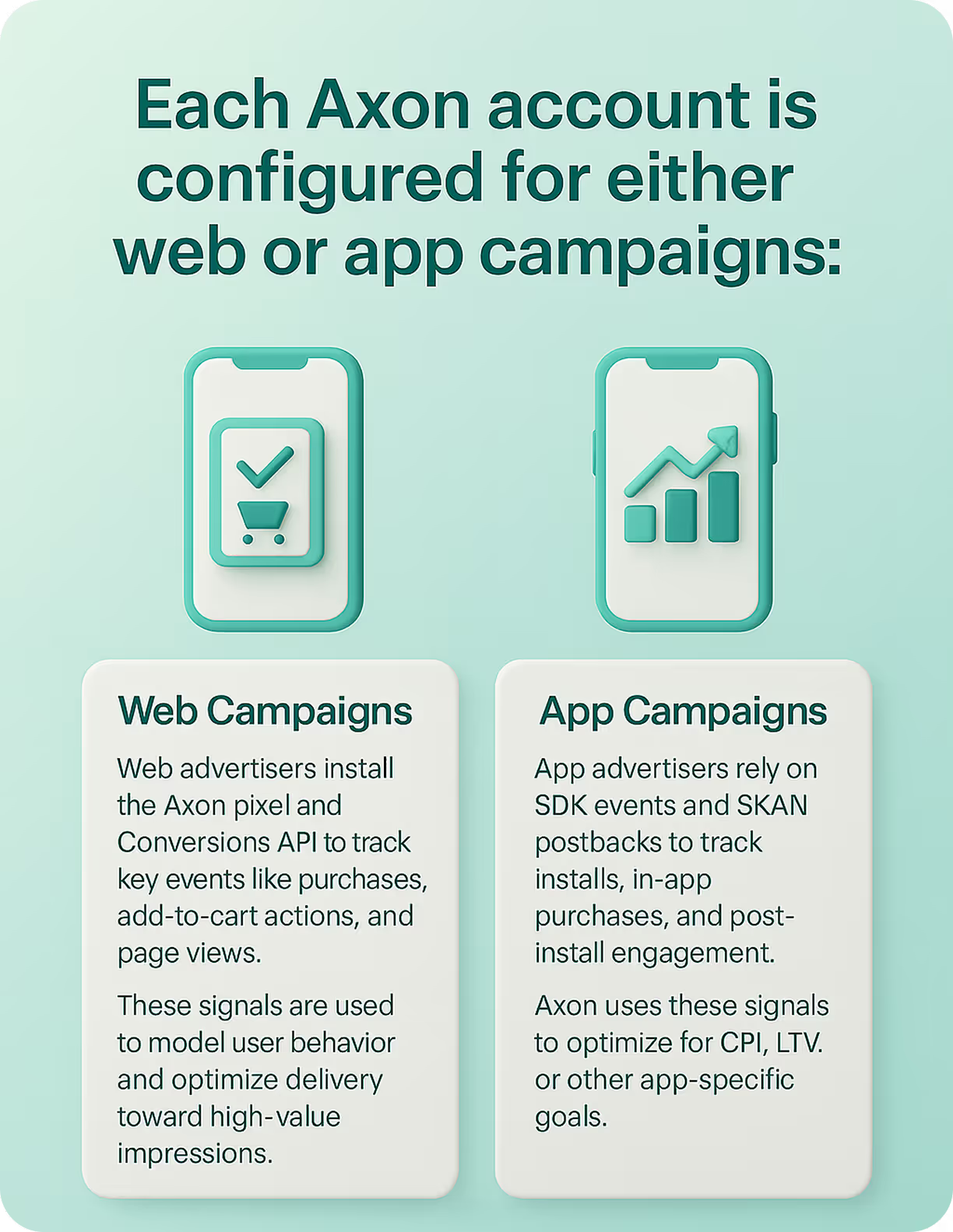
Each Axon account is configured for either web or app campaigns:
- Web advertisers install the Axon pixel and Conversions API to track key events like purchases, add-to-cart actions, and page views. These signals are used to model user behavior and optimize delivery toward high-value impressions.
- App advertisers rely on SDK events and SKAN postbacks to track installs, in-app purchases, and post-install engagement. Axon uses these signals to optimize for CPI, LTV, or other app-specific goals.
What sets Axon apart is its ability to operate without manual audience segmentation or rule-based bidding. Instead, it continuously ingests performance signals, predicts conversion likelihood, and adjusts delivery dynamically — allowing advertisers to scale efficiently, even in signal-restricted environments.
For ecommerce and DTC brands, this means unlocking mobile advertising as a viable growth channel — with automation that adapts to user behavior and creative performance in real time.
How Axon’s Machine Learning Model Works
At the core of Axon is a modular prediction engine that makes real-time decisions for every impression. It doesn’t rely on static averages or pre-set rules. Instead, it evaluates each opportunity based on live campaign data and contextual signals to determine how likely it is to drive a conversion — and how much it’s worth bidding.
Key Functions
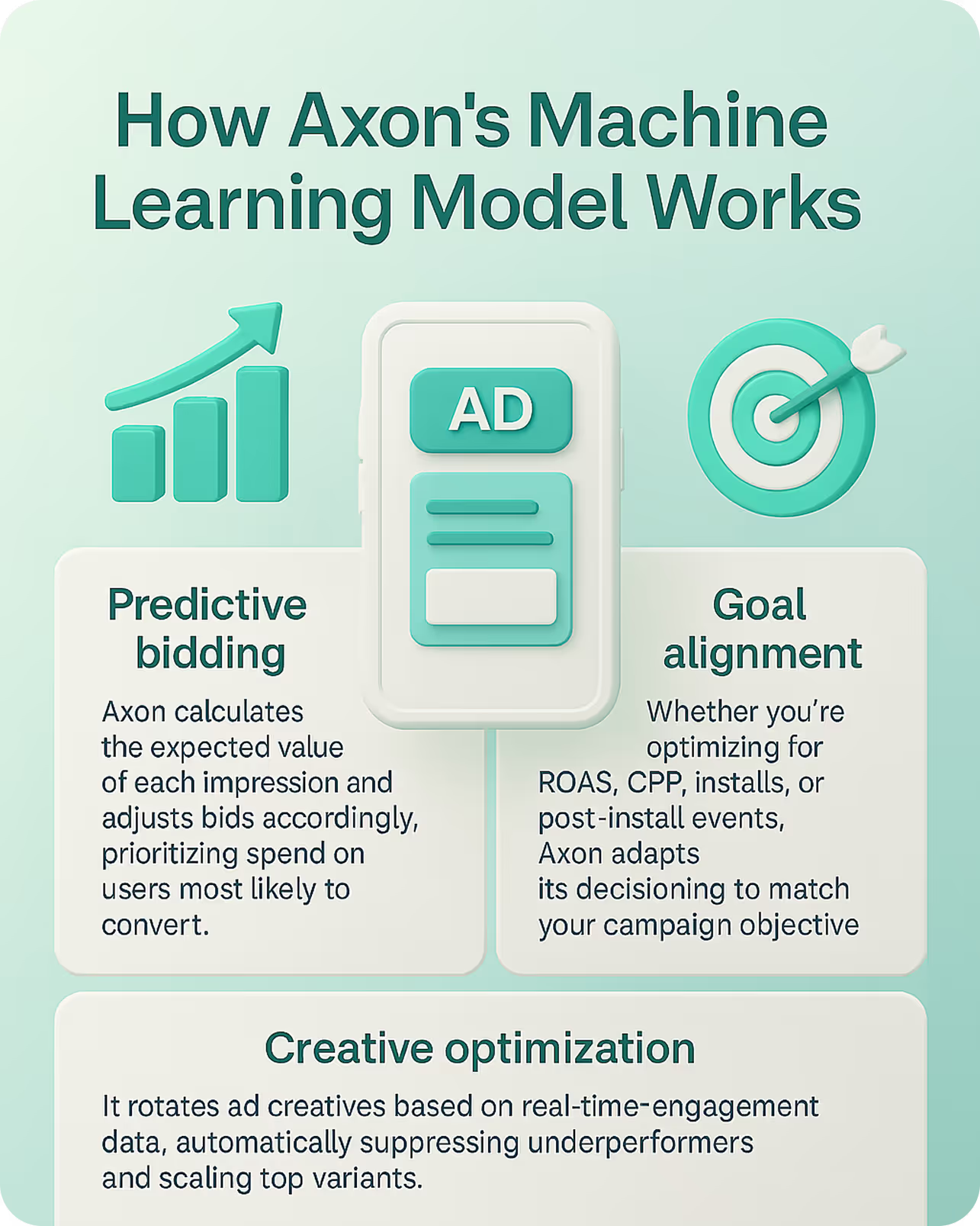
- Predictive bidding: Axon calculates the expected value of each impression and adjusts bids accordingly, prioritizing spend on users most likely to convert.
- Creative optimization: It rotates ad creatives based on real-time engagement data, automatically suppressing underperformers and scaling top variants.
- Goal alignment: Whether you’re optimizing for ROAS, CPP, installs, or post-install events, Axon adapts its decisioning to match your campaign objective.
Signal Sources
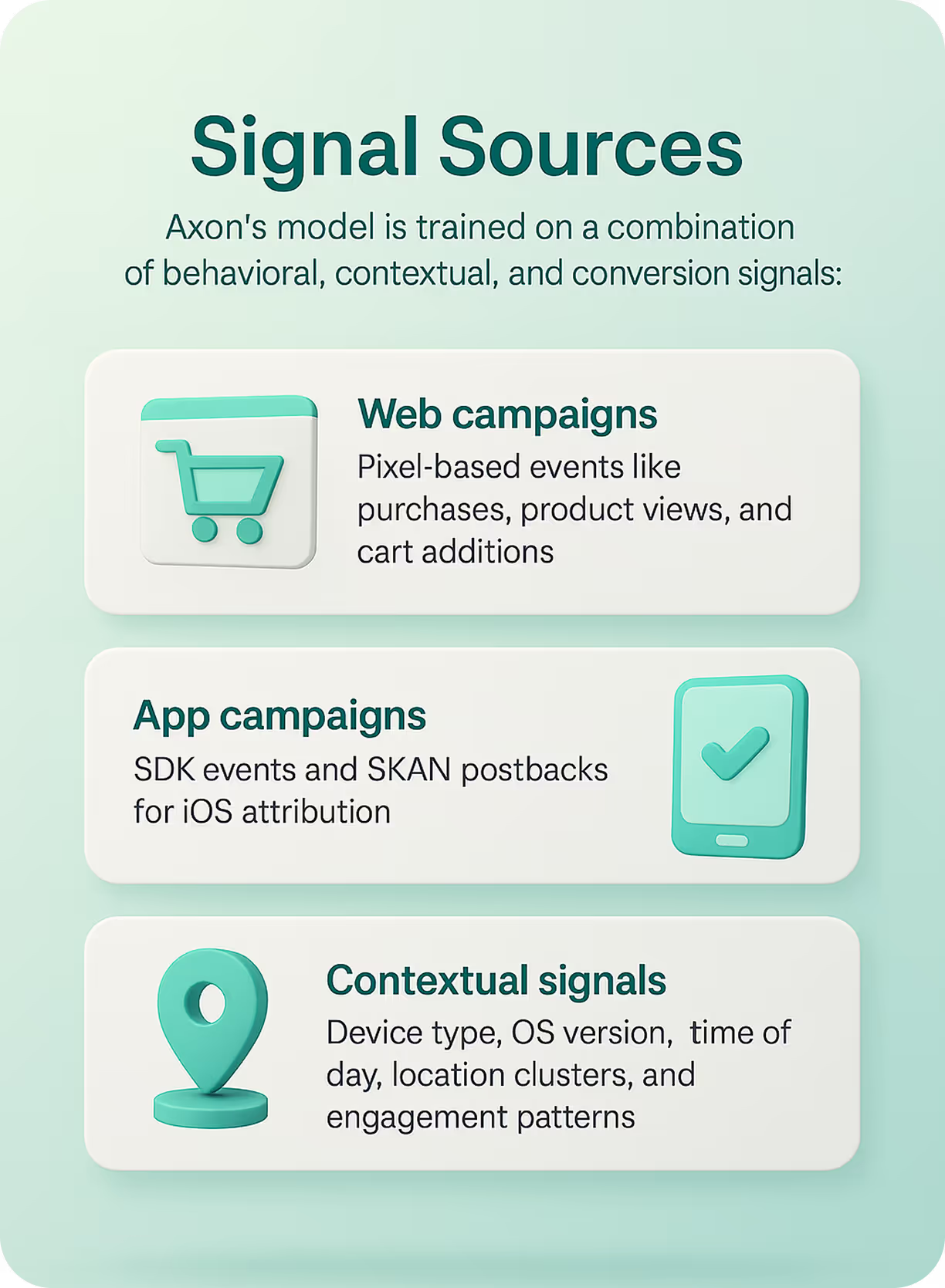
Axon’s model is trained on a combination of behavioral, contextual, and conversion signals:
- Web campaigns: Pixel-based events like purchases, product views, and cart additions
- App campaigns: SDK events and SKAN postbacks for iOS attribution
- Contextual signals: Device type, OS version, time of day, location clusters, and engagement patterns
Importantly, Axon does not rely on personal identifiers. All signals are aggregated and privacy-safe, enabling performance optimization even in environments with limited user-level data.
This architecture allows Axon to adapt in real time — learning from every impression, adjusting delivery on the fly, and continuously improving campaign outcomes without manual intervention.
What Can you Find in Axon?
Axon introduces architectural upgrades to improve speed, scale, and creative relevance.
Faster Decisioning
- Millisecond-level response across billions of impressions
- Smarter expert routing via enhanced MoE architecture
- Real-time creative rotation to suppress fatigue and surface top performers
Deeper Creative Intelligence
- Semantic matching between creative messaging and user context
- Engagement prediction before creatives are served
- Automated variant testing without manual setup
Privacy-Safe Signal Modeling
- SKAN 4.0 support for app campaigns
- Pixel-based optimization for web advertisers
- Aggregated signal modeling for privacy-safe performance
Expanded Platform Support
- Optimized for iOS, Android, and CTV
- Tailored strategies for different device types and operating systems
- Cross-platform insights to inform bidding and creative delivery
Axon’s Mixture of Experts Architecture
Axon’s model is built on a Mixture of Experts (MoE) framework — a modular system where specialized sub-models handle different types of decisions.
Why MoE Matters
- Precision: Inputs are routed to the most relevant expert
- Speed: Only necessary experts are activated, reducing latency
- Scalability: Handles billions of impressions without bottlenecks
- Flexibility: Experts can be updated individually without downtime
This design allows Axon to scale across mobile, CTV, and ecommerce without sacrificing performance.
Attribution and Signal Use
Axon adapts to different attribution environments based on campaign type.
Web Campaigns
- Pixel-based tracking for conversion signals
- ROAS and CPP as primary optimization goals
- No SKAN or MMPs involved
App Campaigns
- SKAN postbacks for iOS attribution
- SDK events to track installs and post-install actions
- CPI and LTV as common metrics
Axon’s architecture supports both environments using aggregated, privacy-safe data.
Practical Use Cases for Web Advertisers
Axon is especially effective for ecommerce and DTC brands running performance-driven campaigns on their websites. Its machine learning engine is designed to optimize toward purchase behavior — not just clicks or engagement — making it a strong fit for advertisers focused on ROAS and CPP.
Pixel-Based Optimization
The Axon pixel and Conversions API allow advertisers to send real-time conversion signals from their website, including:
- Purchase completions
- Add-to-cart actions
- Product views and page depth
These signals are anonymized and aggregated, then fed into Axon’s learning engine to model user intent and conversion likelihood. The system uses this data to prioritize delivery toward users statistically more likely to convert — even without personal identifiers or manual targeting.
This setup is essential for ecommerce brands that need to optimize spend based on actual purchase behavior rather than proxy metrics.
Creative Rotation
Axon automatically rotates creatives based on live performance data. Advertisers should upload a diverse set of assets, including:
- Static images with clear CTAs
- Short-form product videos (30-60 seconds)
- Interactive overlays or end cards (e.g., tap-to-shop, carousel previews)
Axon continuously evaluates creative engagement — CTR, conversion rate, bounce rate — and suppresses underperforming variants before they impact results. This allows advertisers to scale creative testing without manual A/B setups or fatigue monitoring.
Goal Selection
Axon supports two primary optimization goals for web campaigns:
- ROAS (Return on Ad Spend): Axon prioritizes impressions likely to generate higher revenue per dollar spent.
- CPP (Cost Per Purchase): Axon minimizes acquisition cost while maintaining conversion quality.
Because Axon does not support manual bidding, goal selection directly informs how the system allocates budget and evaluates performance. Advertisers should align their campaign setup with business outcomes and ensure conversion tracking is properly configured.
No Audience Segmentation
Axon does not support manual audience filters or targeting rules. Instead, it uses behavioral and contextual signals — such as product views, session depth, and time of day — to identify high-intent users and serve relevant creatives.
This approach simplifies campaign setup and ensures compliance with privacy regulations, while still delivering performance through predictive modeling.
Performance Highlights
Axon has delivered measurable results across ecommerce, gaming, and utility verticals:
- 68% YoY revenue increase (AppLovin Q3 2025)
- 81% operating margins driven by automated optimization
- 20–30% higher engagement for ecommerce brands using semantic creative matching
These outcomes are powered by Axon’s ability to forecast user value, adapt delivery in real time, and optimize creative performance without manual oversight.
How Axon Learns and Evolves
Axon is a continuously learning system. It adapts instantly based on live campaign data — not static training cycles.
Learning Inputs
- Web signals: Pixel events, creative engagement, bounce rates
- App signals: SDK events, SKAN postbacks, retention curves
- Contextual signals: Device type, OS, time of day, location clusters
Learning Frequency
- Daily refreshes: Capture short-term trends and anomalies
- Weekly tuning: Adjust expert routing and model weights
- Continuous feedback loops: Real-time updates based on campaign outcomes
This enables Axon to respond to seasonal shifts, platform changes, and user behavior without retraining from scratch.
Where Else Axon Shows Up
Axon’s machine learning engine powers other parts of AppLovin’s ecosystem:
- Semantic Search and NLP: Matches users with creatives based on context and behavior
- Developer Tools: Powers automated QA, ad logic scripting, and campaign rule generation
- Creative Automation: Tracks engagement, suppresses underperformers, and rotates ads automatically
Final Thoughts
Axon is designed for precision — not flash. It powers smarter decisions across the ad stack using real-time data, modular architecture, and privacy-safe signals.
What sets it apart:
- Predictive bidding based on conversion probability
- Modular MoE architecture for speed and scalability
- Creative intelligence that adapts to user context
- Privacy-first design built for post-IDFA environments
- Continuous learning from live campaign data
If you’re scaling a mobile app, navigating privacy constraints, or looking for a platform that explains its decisions, Axon is worth a closer look.
FAQs About Axon
What is Axon’s machine learning model used for? To predict conversion value, optimize bids, and rotate creatives in real time based on live signals.
How does Axon’s Mixture of Experts architecture work? It routes decisions through specialized sub-models for speed, accuracy, and scalability — activating only the experts needed for each input.
Is Axon effective in privacy-restricted environments like iOS SKAN? Yes. It uses contextual signals and supports SKAN attribution for app campaigns, and pixel-based tracking for web.
What makes Axon different from traditional neural networks? Axon learns continuously from live campaign data and adapts instantly to platform changes and user behavior.
Who should use Axon by AppLovin? Advertisers focused on ROAS and CPP — including ecommerce brands, DTC websites, and mobile apps — who need scalable, automated performance without manual targeting.

Learn how Axon turns a product URL into a video ad in minutes, and how to customize and test variations to scale performance.