

Axon AppLovin for E-Commerce: Smarter Ads, Better ROAS
How E-Commerce Brands Use Axon by AppLovin
Axon by AppLovin has been growing tremendously in large part due to how it has unlocked scale and performance with in-app mobile advertising for brands like Nectar, immi Ramen, and True Classic - just check out AppLovin’s stock this year for proof!
Axon helps ecommerce brands run performance-driven mobile ad campaigns by using predictive AI to optimize bidding, target high-intent shoppers, and prioritize creatives that convert. For web-based businesses — including DTC brands and online retailers — Axon’s machine learning engine adapts in real time using pixel-based signals to improve ROAS and scale efficiently.
Here’s how ecommerce advertisers are using Axon today — and how you can apply the same strategies to your own campaigns.
1. How to Set Up Axon for Ecommerce Campaigns
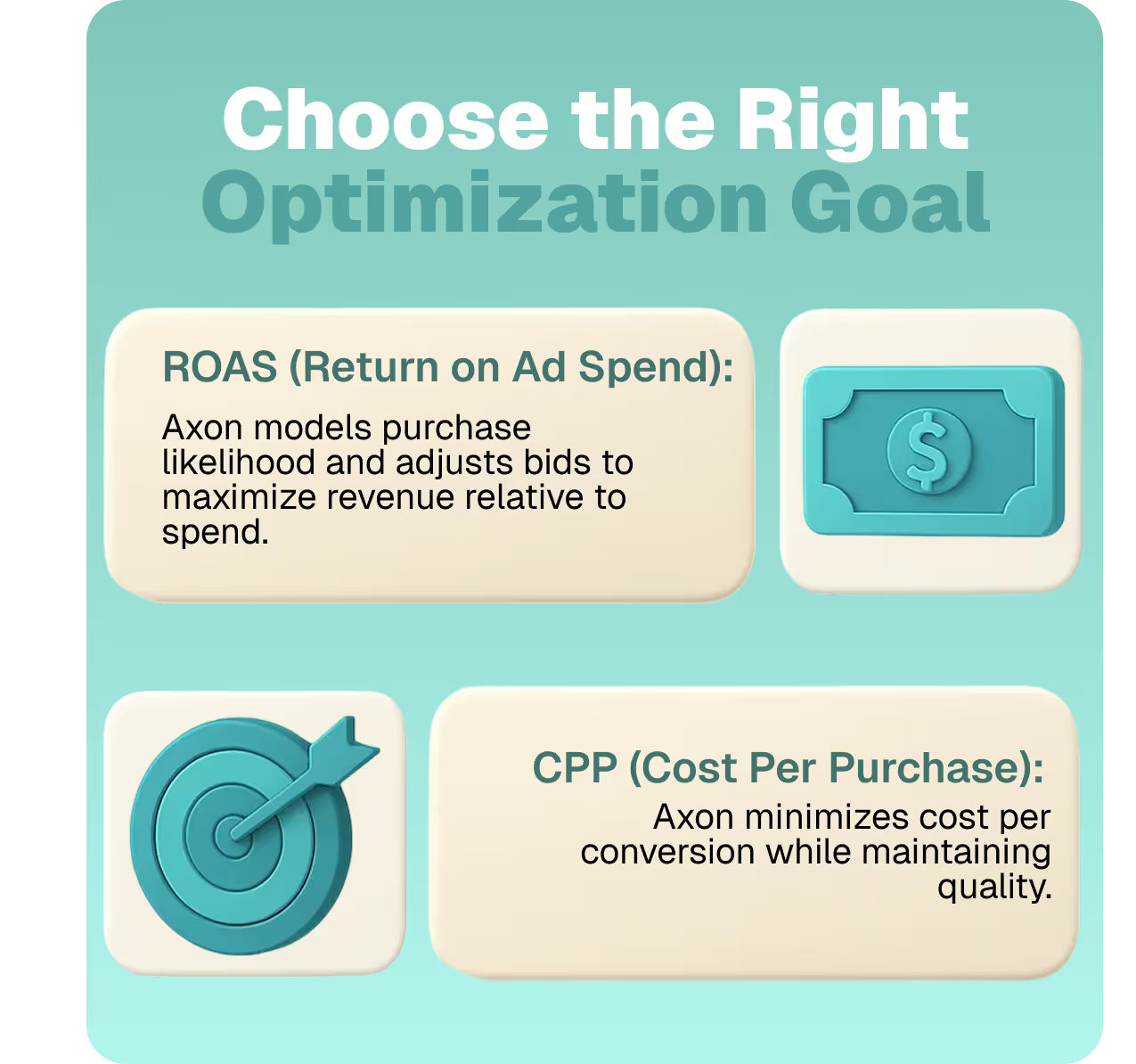
Choose the Right Optimization Goal
Axon supports goal-based optimization. For ecommerce brands, the two relevant goals are:
- ROAS (Return on Ad Spend): Axon models purchase likelihood and adjusts bids to maximize revenue relative to spend.
- CPP (Cost Per Purchase): Axon minimizes cost per conversion while maintaining quality.
Avoid mixing goals. Each campaign should be configured around a single objective to ensure Axon’s machine learning can optimize effectively.
Install the Axon Pixel and Conversions API
Axon relies on pixel-based signals to model conversion likelihood. For ecommerce campaigns:
- Install the Axon pixel on product, checkout, and confirmation pages.
- Configure the Conversions API to pass:
- Purchase events with revenue values
- Add-to-cart actions
- Page views and session depth
These signals are anonymized and aggregated to support real-time optimization. SKAN postbacks are not used in web campaigns.
2. Best Ad Formats for Ecommerce Brands
Axon’s performance depends heavily on creative quality. The system automatically tests and prioritizes variants based on engagement and conversion signals.
Short-Form Video and Product Demos
- 30-60 second clips
- Real people using the product
- Before/after transformations
- Unboxing or quick demo moments
These formats consistently drive engagement and help Axon identify high-performing assets.
Interactive Experiences
Playables and interactive overlays allow users to “try before they buy.” Examples include:
- Virtual try-ons
- Color swatch selectors
- Tap-to-shop elements
These formats boost engagement and provide stronger signals for Axon’s bidding engine.
Static Ads with Clear CTAs
For retargeting and seasonal promotions, static ads remain effective:
- Bold product image
- Concise headline
- Strong CTA like “Shop Now” or “Get 20% Off”
Axon will test and refine versions automatically — just keep the message clear and mobile-friendly.
3. Improve ROAS with Smarter Data and Strategy
Track Post-Click Events
Axon optimizes based on conversion signals, not just clicks. Make sure your setup captures:
- Add-to-cart actions
- Completed checkouts
- Repeat purchases
The more event data you feed Axon, the more accurately it can model user value and adjust bidding.
Align Bidding Strategy with Campaign Goals
Match your bidding logic to your optimization goal:
- ROAS → value-based bidding
- CPP → action-based bidding
Avoid using CPI — it applies only to mobile app installs and is not relevant for ecommerce websites.
4. Targeting Options for Ecommerce Campaigns
Axon uses behavioral and contextual signals to deliver ads to high-intent users.
Behavioral and Contextual Targeting
Axon analyzes browsing habits, engagement depth, and ignored content to identify users likely to convert. Contextual targeting matches ads to relevant environments — for example:
- Outdoor gear in hiking content
- Skincare in wellness articles
- Tech accessories in productivity tools
5. Creative Testing for Brand-Driven Campaigns
Axon’s creative system identifies which variants drive conversions and reallocates delivery accordingly. For DTC brands, creative testing is essential.
Test formats like:
- Founder-led video intros
- UGC-style product demos
- Lifestyle shots with subtle CTAs
- Timed promos or seasonal offers
The more you test, the faster Axon learns and improves performance.
6. ROAS vs CAC: What to Prioritize
It's best practice to test both approaches.
Axon supports all approaches. Just ensure your campaign goal matches your business objective.
7. Axon vs Meta Ads for Ecommerce Brands
Performance and Cost Efficiency
Meta Ads offer broad reach, but CPMs fluctuate. Axon maintains steadier ROAS by bidding based on predicted user value, not audience size.
Many brands report:
- Lower CAC for high-AOV products
- More consistent ROAS across regions
- Stronger mid-funnel and retargeting performance
Audience Signals
Meta relies on social data, which is increasingly limited by privacy changes. Axon uses pixel-based behavioral signals — including session depth, purchase history, and engagement — making its targeting intent-driven.
Creative Automation
Meta requires frequent manual creative refreshes. Axon automates rotation and prioritization, ideal for lean teams focused on efficiency.
Final Thoughts: How to Scale Smarter with Axon
Axon is built to help ecommerce brands grow profitably by aligning machine learning with measurable business outcomes. It automates delivery and adapts to real-time purchase signals, reallocates spend toward high-performing creatives, and continuously refines bidding based on conversion probability. When used strategically, Axon enables advertisers to scale without compromising ROAS or acquisition efficiency.
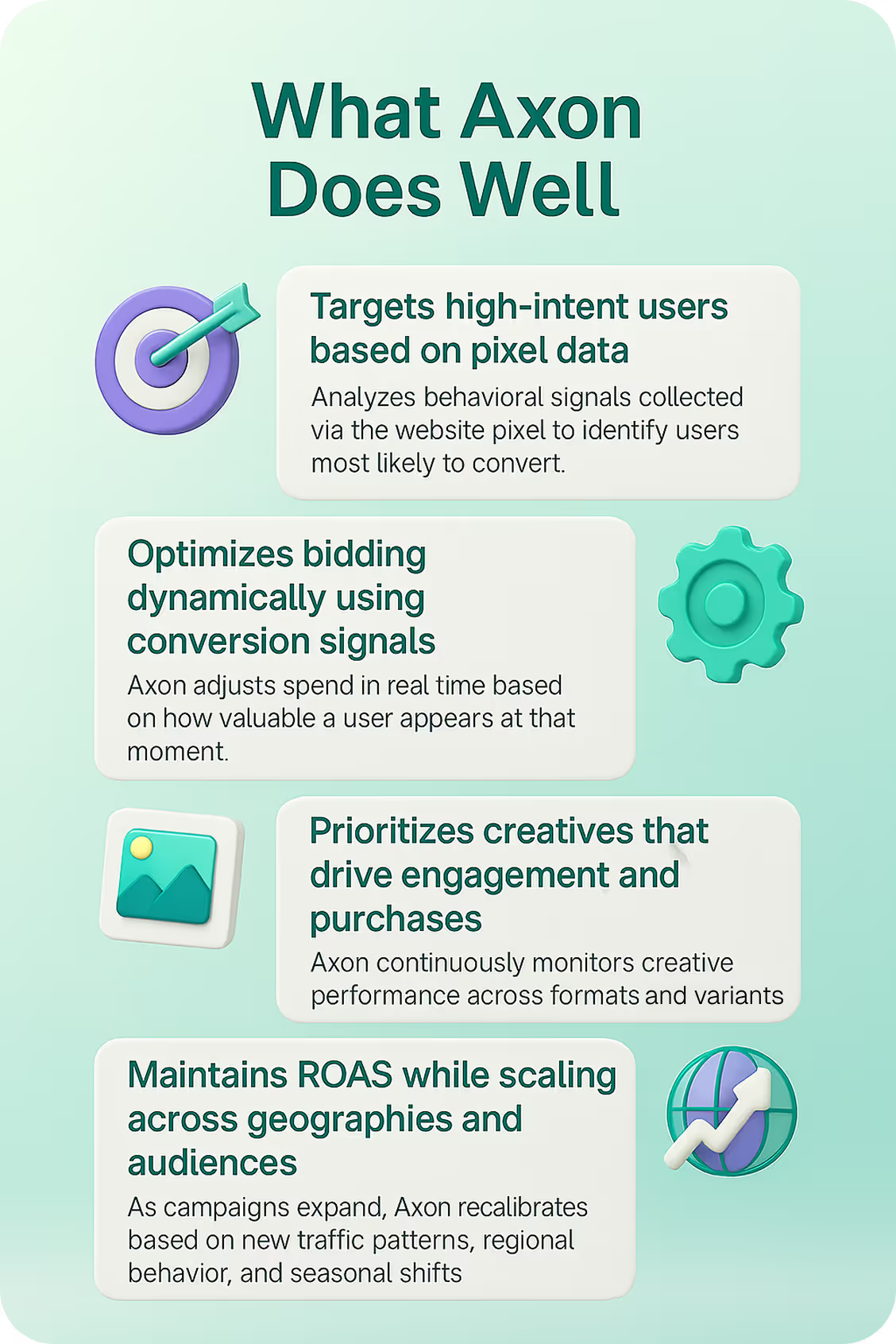
What Axon Does Well
- Targets high-intent users based on pixel data Axon analyzes behavioral signals collected via the website pixel — including product views, add-to-cart actions, and session depth — to identify users most likely to convert. This allows advertisers to focus spend on audiences with demonstrated purchase intent.
- Optimizes bidding dynamically using conversion signals Instead of static bid rules, Axon adjusts spend in real time based on how valuable a user appears at that moment. If a user shows signs of readiness to buy, Axon bids higher. If not, it conserves budget. This keeps acquisition costs efficient and aligned with actual performance.
- Prioritizes creatives that drive engagement and purchases Axon continuously monitors creative performance across formats and variants. Ads with higher click-through rates and conversion outcomes receive more delivery. Underperforming creatives are suppressed automatically, reducing manual oversight and improving campaign consistency.
- Maintains ROAS while scaling across geographies and audiences As campaigns expand, Axon recalibrates based on new traffic patterns, regional behavior, and seasonal shifts. Its predictive engine ensures that scaling doesn’t dilute performance — instead, it adapts to maintain efficiency across broader reach.
What Success Requires
- Clear campaign goals (ROAS or CPP) Axon’s optimization depends on a single, well-defined objective. ROAS is ideal for revenue-driven strategies; CPP works best when minimizing acquisition cost. Mixing goals within a campaign reduces model accuracy and weakens performance.
- Clean pixel and Conversions API setup Axon relies on pixel-based signals to model conversion likelihood. Ensure the pixel is installed on all key pages — product, checkout, and confirmation — and that the Conversions API passes complete, accurate event data, including purchase values and funnel depth.
- Mobile-first creatives with strong CTAs Most impressions are served in mobile environments. Creatives should be visually clear, fast to load, and designed for thumb-scrolling behavior. CTAs should be specific, action-oriented, and aligned with the landing page experience.
- Consistent testing and iteration Axon learns from performance data. Uploading multiple creative variants, refreshing assets regularly, and monitoring engagement metrics allows the system to adapt and improve delivery. Treat creative as a performance lever, not a static asset.
Why Alignment Matters
Axon performs best when campaign goals, signal setup, and creative strategy are aligned. It doesn’t require manual intervention to make decisions — it requires clean data, clear objectives, and enough variation to learn. Advertisers who treat Axon as a responsive system see stronger ROAS, lower CPP, and more sustainable growth.
Scaling with Axon is about spending smarter — using real-time insights to guide budget allocation, creative rotation, and audience prioritization. With the right foundation, ecommerce brands can use Axon to grow profitably, test efficiently, and build campaigns that adapt continuously to user behavior.
FAQs
How does Axon work for ecommerce brands? Axon uses predictive AI to target high-intent shoppers, optimize bids in real time, and prioritize high-converting creatives using pixel-based signals.
What are the best ad formats for ecommerce on Axon? Short-form videos, interactive playables, and static ads with strong CTAs perform best.
Can Axon improve ROAS for online stores? Yes — by tracking post-click events, aligning bidding with conversion goals, and segmenting audiences by intent.
Is Axon better than Meta Ads for ecommerce? Axon offers steadier ROAS and behavioral precision. Meta provides broader reach and manual creative control.
Is Axon good for DTC brands? Absolutely. DTC brands use Axon to scale acquisition, test creatives, and balance ROAS with CAC.
.png)
Learn the major differences between Discovery Campaigns and Prospecting Campaigns on Axon by AppLovin.
.png)
Learn how IDFA works in 2026, when it applies, why user consent matters, and how it fits into modern iOS advertising with SKAN, modeling, and Axon.
.png)