

Mobile App Advertising: What Works in 2025

Mobile App Advertising: In-app advertising that works in 2025
Mobile app advertising in 2025 focuses on in-app formats that drive engagement, retention, and revenue. From rewarded video ads to native placements and interactive playables, successful campaigns prioritize user experience and contextual relevance. With privacy changes and rising acquisition costs, marketers are turning to AI-driven platforms like Axon by AppLovin to optimize delivery, target high-value users, and maximize ROI across mobile ecosystems.
What Is Mobile App Advertising
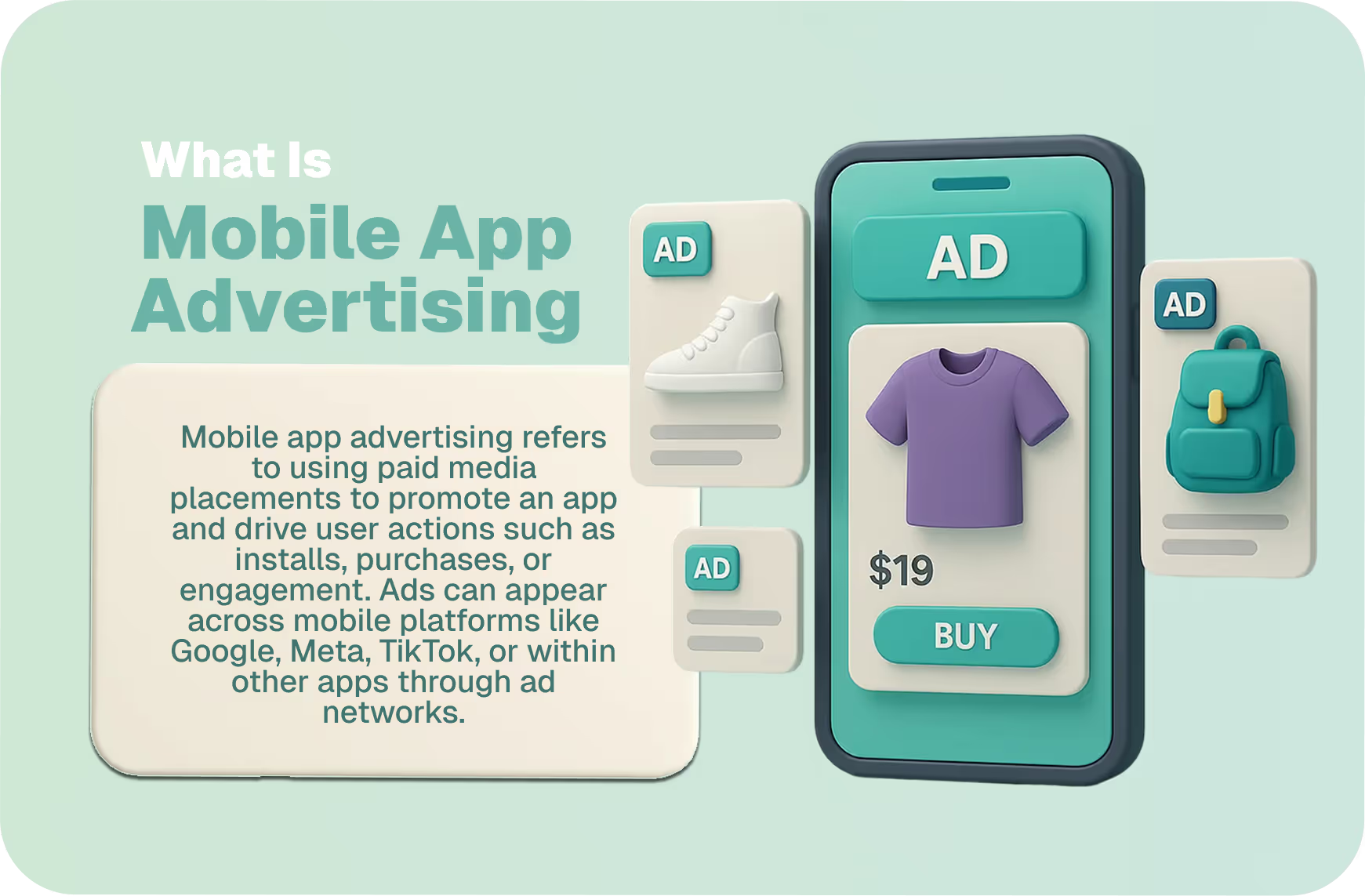
Mobile app advertising refers to using paid media placements to promote an app and drive user actions such as installs, purchases, or engagement. Ads can appear across mobile platforms like Google, Meta, TikTok, or within other apps through ad networks.
Advertisers set a budget, build creative assets, and launch campaigns. Once live, the process becomes iterative: monitor performance, identify patterns, and refine inputs. Effective mobile advertising is not a one-time setup — it’s a continuous loop of testing and optimization.
Why Mobile App Advertising Matters
In 2025, mobile ecosystems are crowded and competitive. Organic discovery is limited, and users are selective with their attention. Paid advertising is the primary way for apps to reach qualified users at scale.
Mobile ads help apps grow by delivering targeted messages to users who are most likely to engage. When campaigns are structured around clear goals and optimized signals, they drive not just installs, but meaningful outcomes — such as purchases, retention, and long-term value.
Key Metrics: CPP vs ROAS
Before launching a campaign, it’s essential to define your optimization goal. Axon’s bidding engine uses this goal to guide delivery, allocate spend, and evaluate performance. For ecommerce and DTC brands running mobile campaigns that drive purchases on websites, the two most relevant metrics are:
- CPP (Cost Per Purchase): This measures how much you spend to acquire a user who completes a purchase. It’s a direct indicator of acquisition efficiency and is especially useful for controlling cost at scale. Axon uses pixel-based purchase events to model conversion likelihood and adjust bids in real time.
- ROAS (Return on Ad Spend): ROAS calculates the revenue generated relative to ad spend. It reflects the overall profitability of a campaign and is the preferred metric for advertisers focused on revenue outcomes. Axon tracks ROAS using conversion value passed through the pixel or Conversions API, and continuously reallocates budget toward impressions with higher predicted revenue potential.
Both metrics depend on clean signal inputs. For web campaigns, this means installing the Axon pixel across key pages — product, checkout, and confirmation — and passing accurate event data such as purchase value, product ID, and funnel depth. The more complete the data, the more precisely Axon can forecast conversion outcomes and optimize delivery.
Choosing between CPP and ROAS depends on your business objective. If your priority is minimizing acquisition cost, CPP is the right fit. If you’re focused on maximizing revenue efficiency, ROAS provides a broader view of campaign performance.
Mobile App Advertising Strategies That Work
Effective mobile advertising is not about following a fixed formula. Strategy depends on your app’s category, your audience’s behavior, and your business goals. That said, high-performing campaigns tend to follow a few consistent principles:
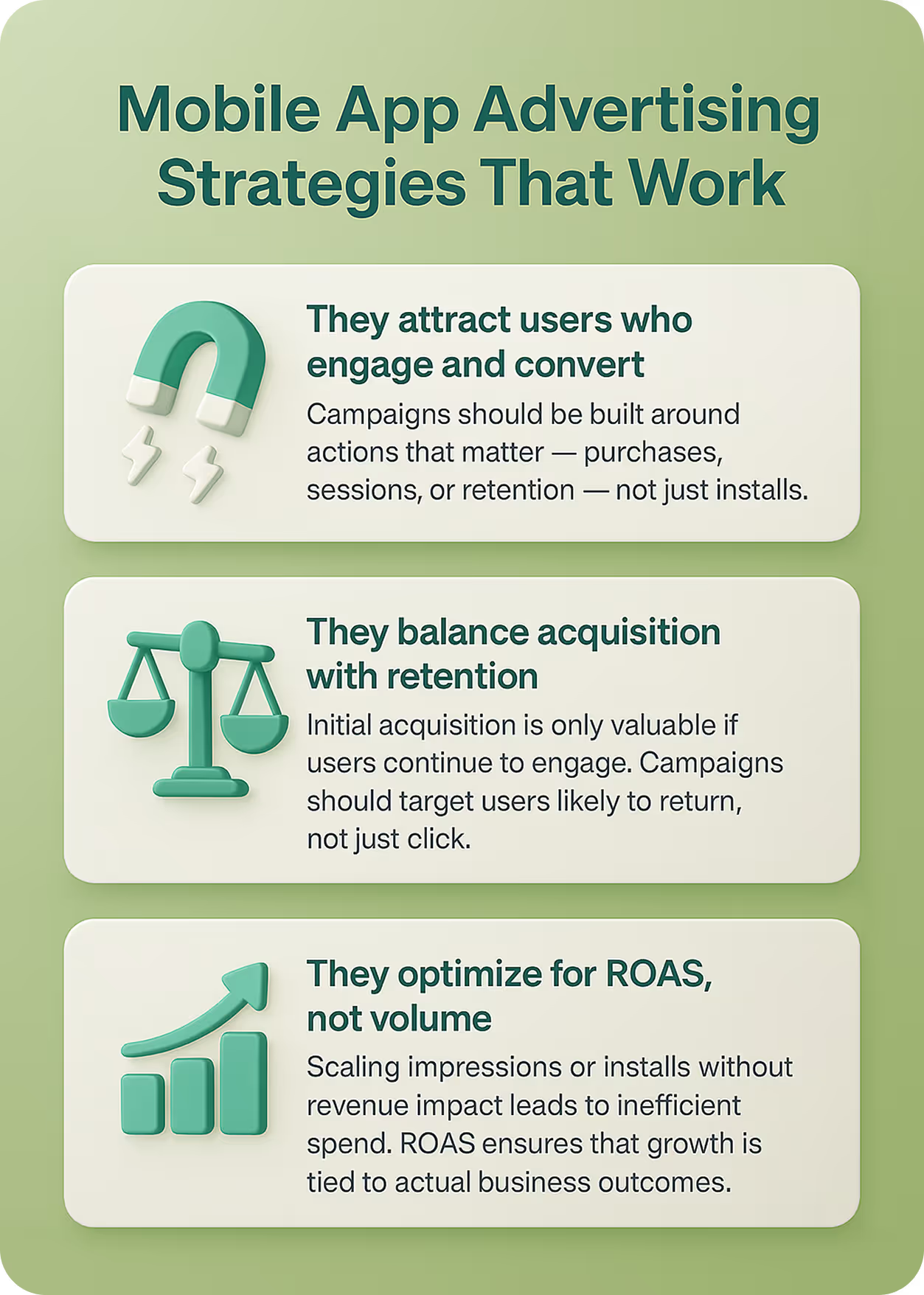
- They attract users who engage and convert: Campaigns should be built around actions that matter — purchases, sessions, or retention.
- They balance acquisition with retention: Initial acquisition is only valuable if users continue to engage. Campaigns should target users likely to return, not just click.
- They optimize for ROAS, not volume: Scaling impressions or installs without revenue impact leads to inefficient spend. ROAS ensures that growth is tied to actual business outcomes.
Retention is a key driver of ROI. A user who installs and never returns represents lost budget. A user who completes a purchase, engages with content, or refers others contributes to long-term value. Acquisition campaigns should be structured to attract users with high retention and monetization potential — using contextual signals, behavioral modeling, and feedback loops.
Axon supports this by forecasting conversion likelihood before the install and adjusting bids accordingly. The system prioritizes impressions with higher predicted value, helping advertisers scale without sacrificing efficiency.
Budgeting and Bidding Tips
Campaign performance is often determined by how well the initial setup is executed. Many advertisers lose budget early due to rushed launches or unclear goals.
- Start with a modest budget: Use early spend to gather signal, not to scale.
- Test multiple creatives: Axon rotates assets automatically, but performance depends on having enough variants to learn from.
- Use automated bidding with oversight: Axon adjusts bids based on predicted conversion value, but manual monitoring ensures alignment with business goals.
- Set a clear optimization goal: Choose CPP if you want to control acquisition cost, or ROAS if you’re focused on revenue efficiency. Avoid mixing goals within a single campaign.
- Pause underperforming campaigns quickly: Axon surfaces performance data in real time. Use it to suppress low-performing creatives or segments before they drain budget.
Strong campaigns are iterative. They use early data to refine targeting, creative, and bidding logic — and they stay aligned with measurable outcomes throughout.
Best Platforms for Mobile In-App Advertising
Different platforms offer different strengths. Choose based on your audience and campaign goals.
The closed, walled gardens (Google, Meta, TikTok) remain essential for scale, data richness, and sophisticated delivery. Complementing these, Axon unlocks the billions of other in-app impressions being served across open mobile inventory — games, utilities, and content apps — creating incremental reach and ROAS gains beyond social.
- Google Ads: Strong for intent-based targeting.
- Meta (Facebook & Instagram): Offers detailed targeting by interests, behaviors, and demographics.
- TikTok: Best for younger, visual-first audiences. Ads must feel organic and culturally relevant.
- Axon: Predictive, privacy-first optimization across open in‑app exchanges and SDK‑mediated supply. Axon models CPP/ROAS value pre‑impression, rotates creatives to reduce fatigue, and reallocates spend toward high‑value users — particularly outside walled gardens where traditional signals are scarce.
- Emerging channels: Reddit, Snap, and in‑game networks can be effective for niche audiences.
Axon integrates across these platforms and uses predictive models to optimize delivery and creative performance, coordinating goals like ROAS across both social and the broader in‑app ecosystem.
Mobile Ad Formats That Convert
Format affects how your message is delivered and experienced. In 2025, high-performing formats are fast, native, and interactive.
- Native ads: Blend into the app environment and feel like part of the experience.
- Short-form video: Vertical, fast-paced, and emotionally engaging. Hook users in the first few seconds.
- Playables: Let users try, before downloading. Effective in gaming and increasingly used in other categories.
Choose formats based on your app category and user behavior. Test and refine based on engagement data.
Creative Optimization: What Actually Works
Creative is the first point of contact between your campaign and the user. It determines whether someone stops scrolling, engages, or ignores the ad entirely. In mobile environments, where attention spans are short, (Axon ads are viewed 35s average) and screens are small, clarity and speed matter more than polish.
Design principles for mobile ads:
- Use bold, high-contrast visuals that are easy to interpret at a glance.
- Keep text minimal and legible — avoid dense copy or small font sizes.
- Prioritize vertical formats to match native mobile viewing behavior.
- Write CTAs that reflect user motivation, not generic commands. For example, “Start your free trial” performs better than “Learn more” when the goal is conversion.
- Tailor creative to platform context. What works on TikTok may not translate to Meta or Google. Axon’s creative rotation system performs best when it has platform-specific variants to test.
- Refresh assets regularly — ideally every week — to prevent fatigue and maintain engagement.
Avoid overdesign. Complex layouts, excessive animation, or unclear messaging reduce performance. Ads should communicate value quickly and invite action without friction.
Axon automatically rotates creatives based on engagement and conversion signals. It suppresses underperforming variants and prioritizes those driving installs, purchases, or post-click engagement. The more diverse and relevant your creative inputs, the more effectively Axon can optimize delivery.
Tracking and Iterating for Performance
Once your campaign is live, creative performance should be monitored continuously. Axon surfaces key metrics such as:
- CPP: Cost to acquire a purchasing user
- ROAS: Revenue generated relative to ad spend
- Engagement rate: Clicks, views, or interactions per impression
- Retention: Post-install behavior such as session depth or repeat visits
Use these metrics to identify which creatives are driving meaningful outcomes. Look for patterns across platforms, formats, and audience segments. Small adjustments — swapping headlines, updating visuals, refining CTAs — can lead to measurable gains.
Creative optimization is not a one-time task. It’s a feedback loop. What performs well today may fatigue tomorrow. Axon’s automated rotation helps manage this, but manual oversight ensures alignment with brand goals and audience expectations.
The most effective advertisers treat creative as a dynamic input — one that evolves with user behavior, platform trends, and campaign objectives.
Mobile Advertising Trends in 2025
The mobile advertising landscape in 2025 is shaped by three major shifts: automation, privacy, and fragmentation. Advertisers who adapt to these realities — and structure their campaigns accordingly — are better positioned to scale efficiently and sustain performance.
AI-Powered Optimization
Machine learning is no longer optional — it’s foundational to how modern campaigns operate. Axon uses predictive models to evaluate each impression in real time, estimating the likelihood of conversion based on contextual signals such as device type, time of day, and historical engagement patterns.
This enables Axon to:
- Adjust bids dynamically based on predicted conversion value
- Rotate creatives automatically to reduce fatigue and prioritize high-performing variants
- Allocate budget toward users and placements with the highest expected ROAS or lowest CPP
The result is a system that continuously learns from performance data and reallocates spend without requiring manual intervention. This is especially valuable during high-traffic periods or when user behavior shifts rapidly.
Privacy-First Targeting
With limited access to user-level identifiers, advertisers must rely on aggregated, consent-based signals. Axon is built for this environment. It does not use IDFA or personal identifiers. Instead, it optimizes delivery using:
- Contextual signals (e.g., device type, OS version, app category)
- First-party data passed through the Axon pixel or SDK
- Modeled conversions based on SKAN postbacks (for apps) or pixel-based events (for web)
This approach ensures compliance with privacy regulations like GDPR, CCPA, and ATT, while maintaining performance through probabilistic modeling and signal inference.
Cross-Platform Coordination
Users don’t stay in one app or channel. They move between social platforms, games, content apps, and ecommerce sites throughout the day. Campaigns that operate in silos miss opportunities to reinforce messaging and capture intent across touchpoints.
Axon supports cross-platform delivery by:
- Unifying campaign logic across Google, Meta, TikTok, and other major networks
- Adapting creative to match platform norms and user behavior
- Maintaining consistent optimization goals (e.g., ROAS) across environments
This allows advertisers to build campaigns that follow the user journey — not just the channel — and deliver cohesive, high-performing experiences across the mobile ecosystem.
How Axon.ai Helps You Scale
Axon helps advertisers optimize campaigns across platforms using predictive bidding, automated targeting, and creative rotation — all grounded in real-time performance signals. It supports both web and app campaigns, using pixel-based tracking for ecommerce brands and SDK/SKAN for mobile apps.
FAQs About Mobile Advertising
What’s the most important metric for mobile advertising in 2025? ROAS is the most comprehensive metric. It connects ad spend to actual revenue and user value.
Should I focus on acquisition or retention? Both matter. Acquisition brings users in, but retention determines long-term ROI.
Which platforms are best for mobile ads? Google, Meta, and TikTok lead in scale and targeting. Choose based on your audience and creative strengths.
What ad formats convert best on mobile? Native ads, short-form video, and playables perform well. They’re fast, immersive, and built for mobile behavior.
How do I know if my creative is working? Track engagement, retention, and conversion. Test variations and iterate based on performance data.
.png)
Learn the major differences between Discovery Campaigns and Prospecting Campaigns on Axon by AppLovin.
.png)
Learn how IDFA works in 2026, when it applies, why user consent matters, and how it fits into modern iOS advertising with SKAN, modeling, and Axon.
.png)