

Axon by AppLovin Data Sources Explained | SKAN Attribution, Predictive Modeling & Analytics Integration

The Data Behind Axon: How AppLovin’s AI Learns from Billions of Events
If you’re in the performance marketing space and have had your ear to the ground lately, you’ve probably heard about brands skyrocketing their spend and performance with Axon. We’ve seen case studies of brands who were once hesitant of mobile in-app advertising outside of paid social go on to increase spend 2-3x week-over-week on the Axon platform.
So let’s get caught up to speed and better understand how Axon’s machine learning based bidding is unlocking scale for brands across all sorts of industries.
What Advertisers Need to Know
Axon by AppLovin is an AI-powered advertising platform that optimizes mobile and web campaigns using billions of aggregated signals. It ingests conversion data, contextual device information, and SKAN postbacks to forecast user behavior and adjust delivery in real time — all while staying privacy-compliant.
Axon doesn’t rely on manual targeting or static rules. It adapts dynamically based on conversion signals and contextual data. Whether you’re running a mobile app or a DTC website, Axon uses:
- Pixel-based conversion data (web): purchases, add-to-cart, page views
- SKAN postbacks and SDK events (app): installs, purchases, retention
- Contextual device signals: time of day, OS version, location clusters
These inputs allow Axon to forecast conversion likelihood before the click or install — enabling smarter bidding, creative rotation, and campaign delivery.
What Data Powers Axon
Axon’s machine learning engine is trained on billions of signals across AppLovin’s ecosystem. These signals are aggregated, privacy-safe, and designed to reflect real user behavior across devices, platforms, and geographies. By combining web, app, and contextual data, Axon builds a predictive foundation that allows it to optimize campaigns in real time — even when attribution is delayed or incomplete.
1. Pixel-Based Web Signals
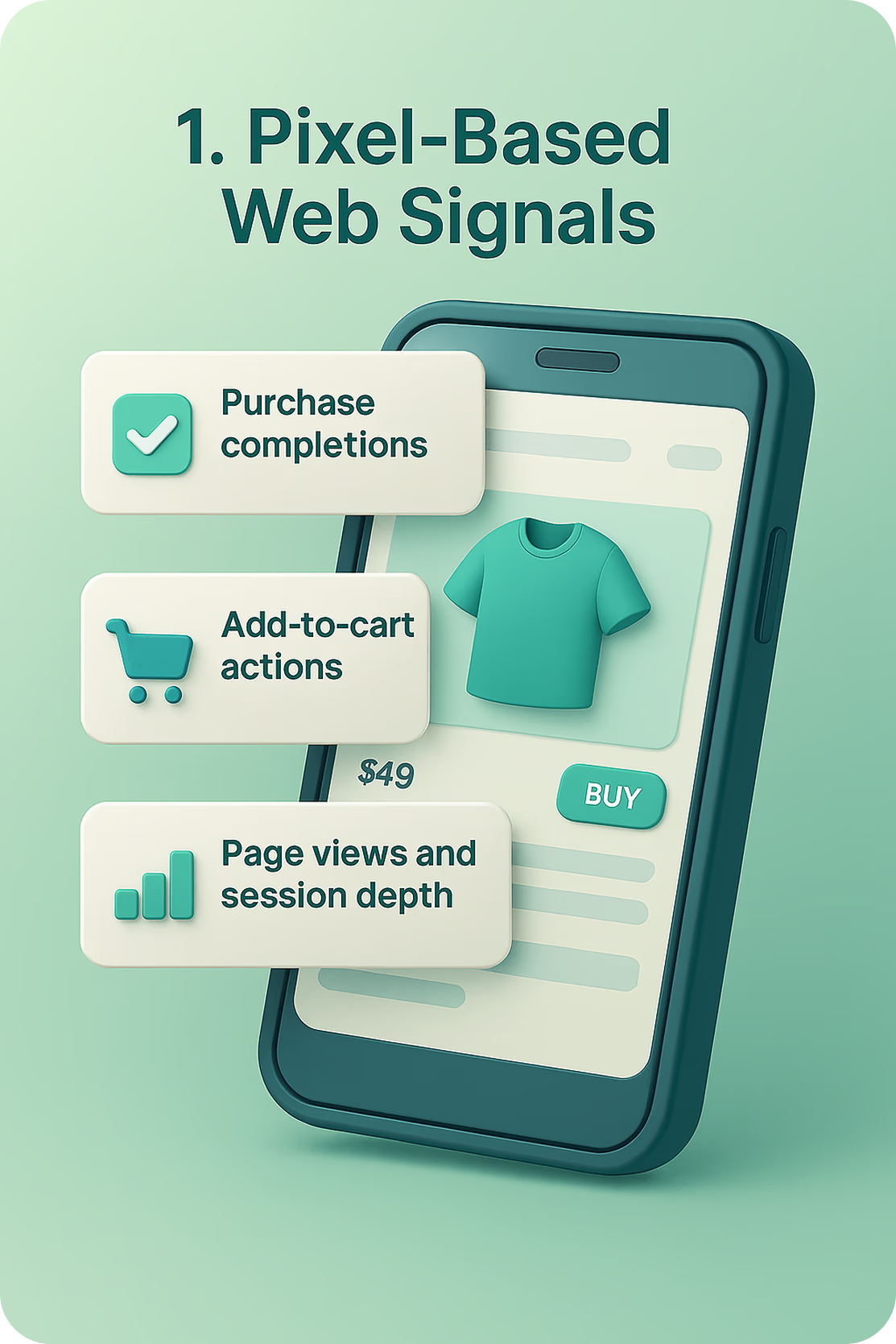
For ecommerce and DTC advertisers, Axon relies on first-party conversion data collected through the Axon pixel and Conversions API. These signals include:
- Purchase completions: Confirmed transactions that indicate revenue-generating behavior
- Add-to-cart actions: Mid-funnel intent signals that help model purchase probability
- Page views and session depth: Indicators of browsing behavior and product interest
These events are anonymized and aggregated, allowing Axon to optimize for ROAS and CPP without relying on cookies or user-level identifiers. The system uses this data to prioritize delivery toward users who are statistically more likely to convert — based on real behavioral patterns, not assumptions.
2. SKAN Postbacks and SDK Events (App Campaigns)
For mobile app advertisers, Axon ingests:
- SKAN postbacks: Apple’s privacy-preserving attribution framework provides delayed, anonymized install data with limited conversion value mapping
- SDK events: In-app actions such as purchases, subscriptions, and retention curves
Axon models conversion likelihood using historical performance and contextual inference. Even when SKAN data is sparse or delayed, Axon fills in the gaps using device-level context and behavioral trends — enabling it to maintain performance in signal-restricted environments.
3. Contextual Device Data
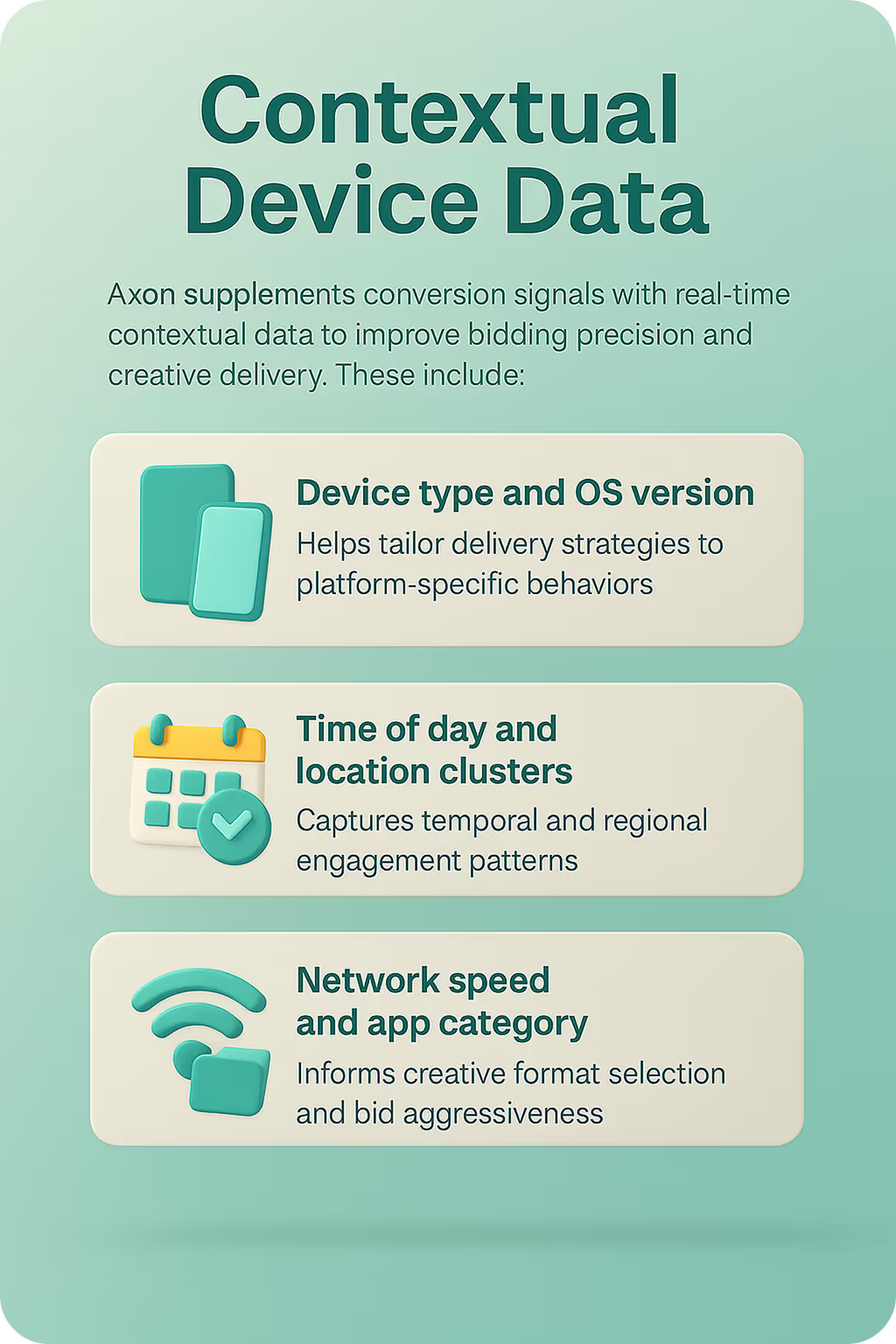
Axon supplements conversion signals with real-time contextual data to improve bidding precision and creative delivery. These include:
- Device type and OS version: Helps tailor delivery strategies to platform-specific behaviors
- Time of day and location clusters: Captures temporal and regional engagement patterns
- Network speed and app category: Informs creative format selection and bid aggressiveness
These signals are especially valuable in privacy-constrained environments where deterministic targeting is unavailable. Axon uses them to infer engagement probability and adjust delivery dynamically — without ever accessing personal identifiers.
4. Privacy-Compliant Data Practices
Axon is engineered for compliance with global privacy standards, including:
- Apple’s AppTrackingTransparency (ATT) framework
- General Data Protection Regulation (GDPR)
- California Consumer Privacy Act (CCPA)
It does not collect or store user-level identifiers like IDFA or GAID. All optimization is based on aggregated, anonymized data. Advertisers are responsible for managing user consent, and AppLovin provides SDK-level tools to help ensure that consent signals are passed correctly and consistently.
How Axon Uses These Signals to Optimize Campaigns
Axon’s optimization engine is designed to make real-time decisions that improve campaign efficiency and conversion outcomes. It doesn’t wait for attribution to catch up — it forecasts user behavior before the click or install, allowing advertisers to allocate spend more effectively and reduce wasted impressions.
Predictive Modeling
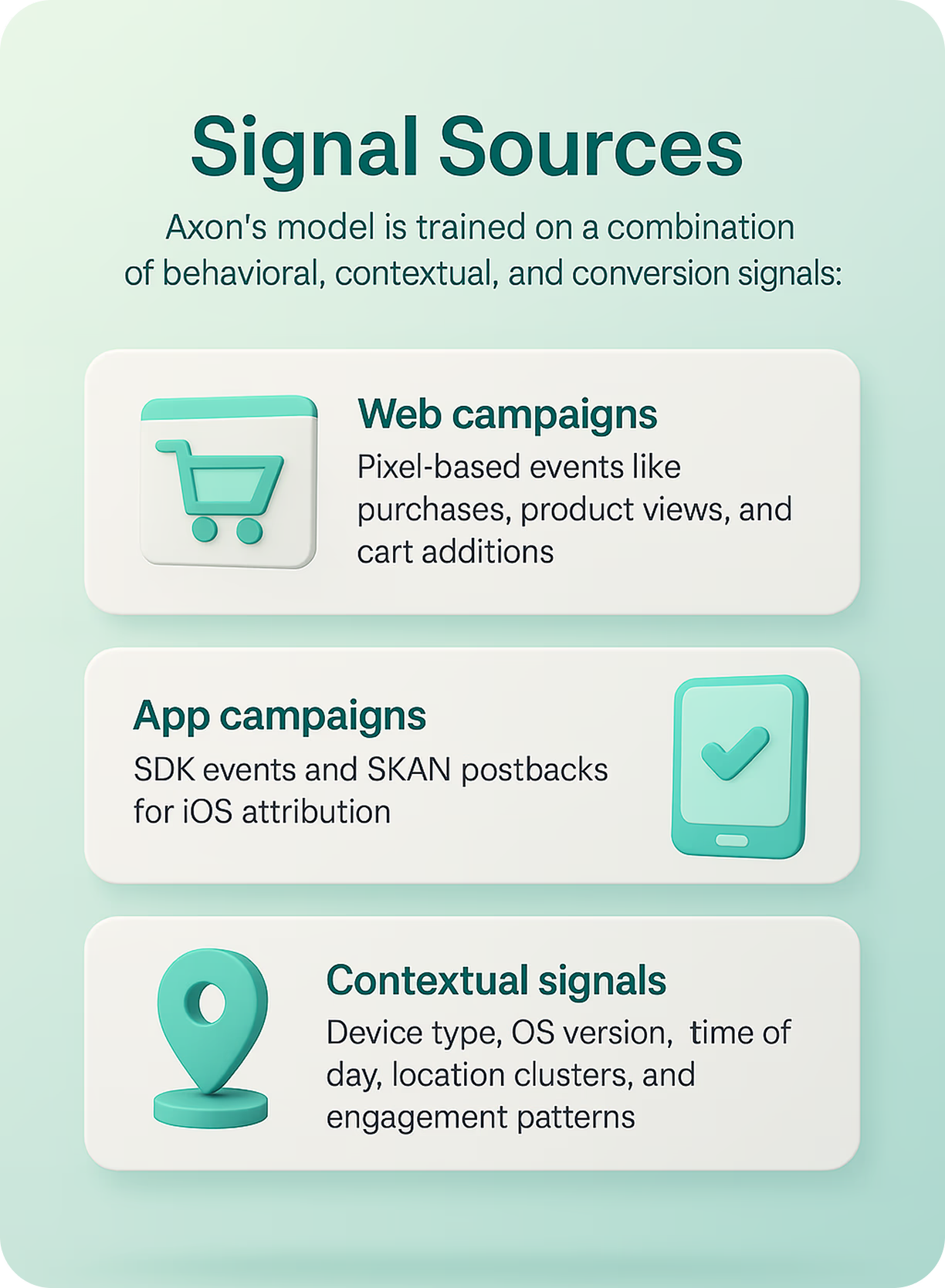
Axon builds behavioral models by continuously ingesting:
- Pixel events from web campaigns (e.g., purchases, add-to-cart, page views)
- SDK signals from app campaigns (e.g., installs, subscriptions, retention curves)
- Contextual data such as device type, time of day, and location clusters
These inputs are aggregated and anonymized, then used to forecast conversion likelihood at the impression level. Axon evaluates each opportunity in real time and assigns a predicted value — enabling advertisers to bid more aggressively on users who are statistically more likely to convert.
This modeling is especially valuable in privacy-constrained environments, where deterministic attribution is limited. Axon fills in the gaps using historical performance and contextual inference, maintaining optimization even when postbacks are delayed or incomplete.
Real-Time Bidding Adjustments
Axon’s bidding engine reacts dynamically to changes in user context and campaign performance. It continuously adjusts bids based on:
- Device context: OS version, connection speed, app category
- Geo performance: Regional conversion trends and cost efficiency
- Creative engagement: Real-time signals like CTR, scroll depth, and bounce rate
This allows Axon to shift budget toward high-performing segments and suppress spend in areas with low conversion probability — without manual intervention. The system recalibrates hourly, ensuring that campaigns stay efficient even as user behavior fluctuates.
Creative Rotation and Performance
Axon tracks creative performance across all formats and variants, including:
- Static images
- Short-form videos
- Interactive overlays and end cards
It monitors engagement metrics such as:
- Click-through rate (CTR)
- Conversion rate (CVR)
- Post-click engagement (e.g., time on site, scroll depth, add-to-cart actions)
When creative fatigue is detected — typically indicated by declining CTR or CVR — Axon automatically rotates in fresh variants. Underperforming assets are deprioritized before they impact overall campaign efficiency.
To support this process, advertisers should:
- Upload at least 3–5 creative variants per campaign
- Refresh assets every 1–2 weeks
- Align messaging with funnel stage (awareness, consideration, conversion)
This ensures Axon has enough data to test, learn, and optimize creative delivery without manual toggling or A/B setups.
Integrating Axon with Your Analytics Stack
Axon is designed to work with external analytics platforms, enabling advertisers to enrich insights and align campaign performance with business goals.
Connect to Your Analytics Stack
Axon’s Reporting API supports integrations with:
- Google Sheets: via Supermetrics or Portable.io
- Power BI and Looker Studio: for interactive dashboards
- BigQuery, Snowflake, Redshift: for large-scale ETL and cross-channel reporting
These integrations allow advertisers to:
- Compare Axon performance against other platforms
- Monitor ROAS trends across geographies and creatives
- Align campaign outcomes with CAC and LTV
- Build executive-ready dashboards with real-time data
Reporting in Axon
Axon’s reporting suite provides granular visibility across both web and app campaigns.
Key Metrics
- ROAS: modeled using pixel or SDK conversion signals
- CPP (Web): cost per purchase
- CPI (App): cost per install
Metrics are available in both aggregate and campaign-level views.
Dimensions
- Creative: format, size, engagement metrics
- Placement type, platform, device type
SKAN-Specific Reporting (App Only)
Axon supports full SKAN integration:
- Conversion value mapping
- Attribution windows and privacy thresholds
- Modeled conversions based on historical performance
Data That Drives Performance
Axon doesn’t wait for attribution to catch up. It forecasts conversion probability using real-time signals, enabling campaigns to adapt before performance drops. Whether you’re scaling a mobile app or optimizing a DTC funnel, Axon turns fragmented data into predictive performance — without compromising privacy.
👉 Explore Axon at axon.ai
FAQs About Axon Data Sources
What data does Axon use for optimization? Pixel-based web signals, SKAN postbacks, contextual device data, and modeled conversions — all aggregated and privacy-safe.
How does Axon handle SKAN postbacks? Axon ingests SKAN data, models conversion outcomes, and fills gaps using contextual inference — keeping campaigns adaptive even when postbacks are delayed or missing.
Is Axon compliant with GDPR and ATT? Yes. Axon avoids user-level tracking and operates entirely on aggregated signals. Advertisers must pass consent flags correctly.
Can I export raw data from Axon? You can export campaign-level data via the Reporting API. Raw user-level data is not available due to privacy restrictions.

See real in-app advertising examples from ecommerce brands running ads inside mobile games on Axon by AppLovin.

Mobile game advertising reaches over 1 billion daily users with full-screen, unskippable ads. Here is why ecommerce brands are finding new customers on Axon by AppLovin and how to set up for real results.
.png)