

Choosing the Right AI Ad Platform for Web Growth | Axon by AppLovin vs InMobi
AppLovin Axon vs InMobi: Choosing the Right Mobile Ad Platform for Web Growth
A Practical Guide for Ecommerce and DTC Advertisers
For ecommerce and DTC brands running performance campaigns on the web, the stakes are high: you need to drive purchases, improve ROAS, and scale efficiently without relying on user-level tracking or manual targeting. You’ve undoubtedly pushed the limits of Meta and potentially TikTok too but you need to keep finding new channels that can scale - discover and test there early enough and you can unlock efficiencies before your competitors too!
Two platforms often mentioned when discussing scaling mobile ad strategies are Axon by AppLovin and InMobi. Both offer AI-driven optimization, but they’re built on fundamentally different assumptions — and those differences matter when your business runs on web-based conversion signals, not app installs or in-app events.
This guide breaks down how Axon and InMobi compare, what web advertisers should prioritize, and how to use each effectively to scale smarter.
What Web Advertisers Actually Need
If you’re running campaigns for a .com storefront, a DTC brand, or a multi-product ecommerce site, your needs are clear:
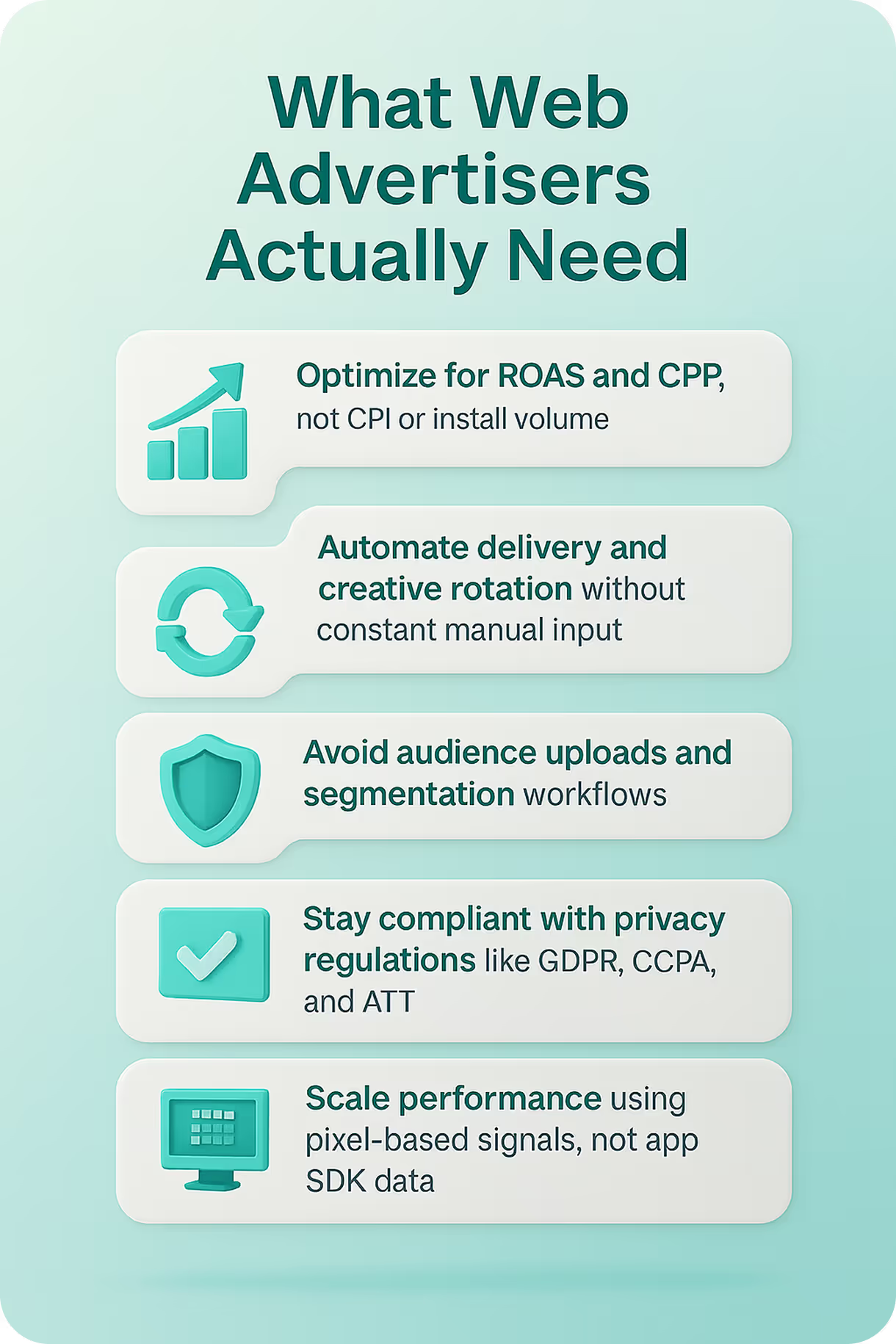
- Optimize for ROAS and CPP, not CPI or install volume
- Automate delivery and creative rotation without constant manual input
- Avoid audience uploads and segmentation workflows
- Stay compliant with privacy regulations like GDPR, CCPA, and ATT
- Scale performance using pixel-based signals, not app SDK data
Let’s start by stating that InMobi doesn't support web advertising.
Axon is designed for this exact environment. It’s not a mediation tool. It’s not an app-only solution. It’s a demand-side platform powered by machine learning, built to help web advertisers optimize delivery, bidding, and creative performance using real-time, privacy-safe signals.
Axon vs InMobi: A Comparison of Approaches
Let’s break down how these two platforms differ — not in features specifically, but in how they actually operate for web advertisers.
1. Optimization Philosophy
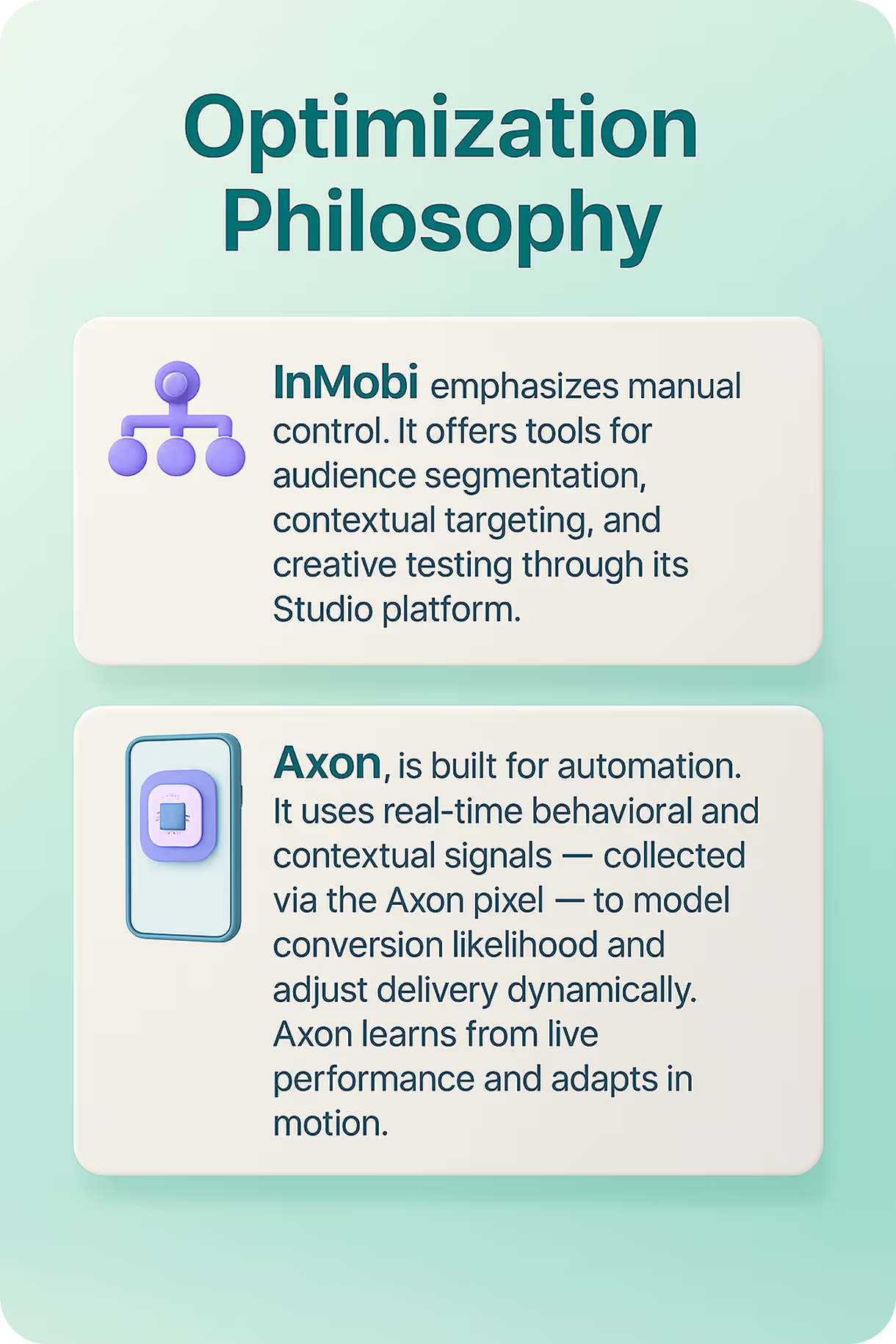
InMobi emphasizes manual control. It offers tools for audience segmentation, contextual targeting, and creative testing through its Studio platform. This can be useful for app developers with rich first-party data and internal UA teams managing granular campaigns.
Axon, on the other hand, is built for automation. It uses real-time behavioral and contextual signals — collected via the Axon pixel — to model conversion likelihood and adjust delivery dynamically. There’s no need to upload audiences or define targeting rules. Axon learns from live performance and adapts in motion.
For web advertisers, this difference is critical. Manual segmentation is time-consuming and often ineffective in privacy-restricted environments. Axon’s automation frees up bandwidth and improves performance without requiring constant oversight.
2. Attribution and Signal Use
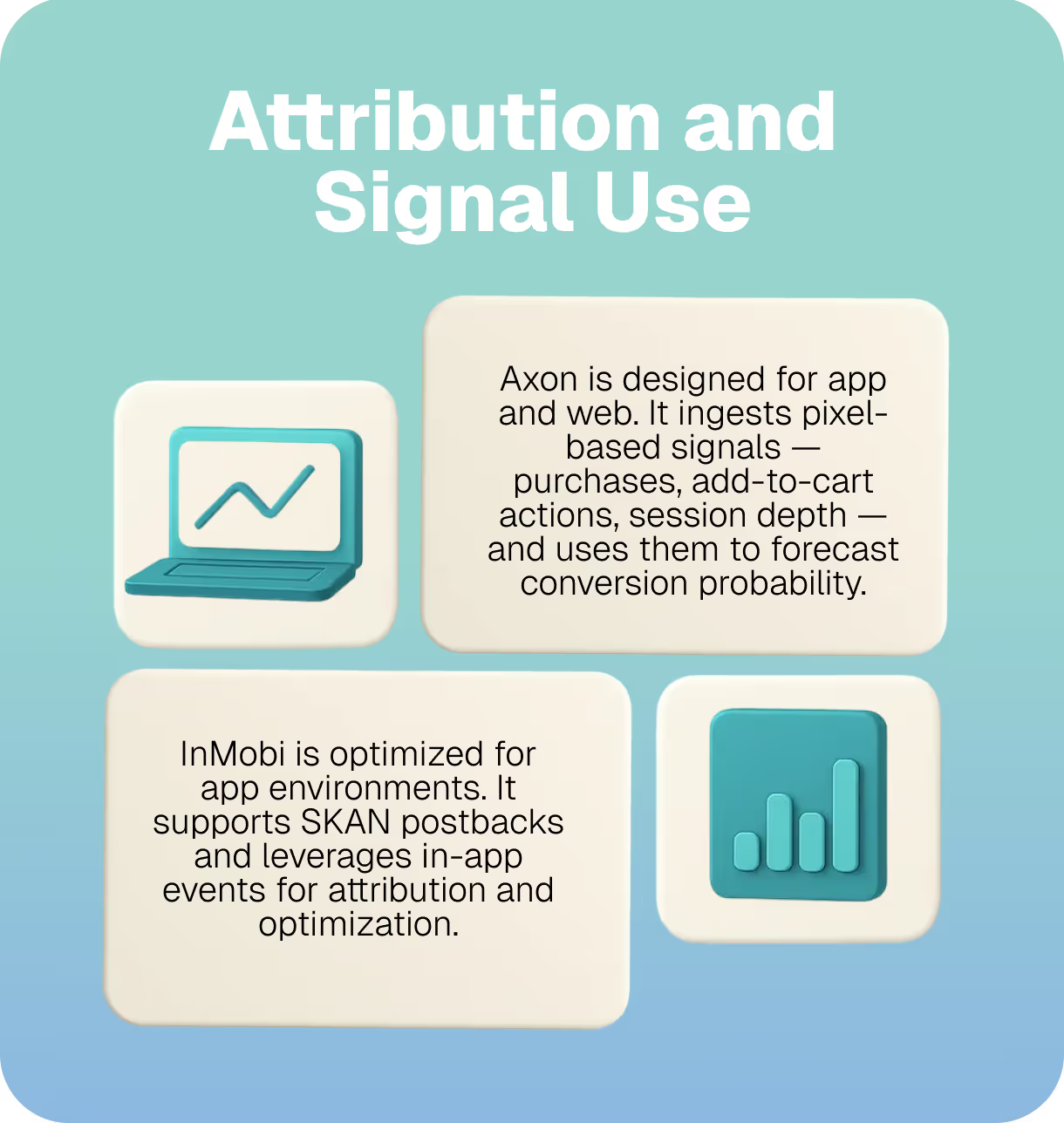
InMobi is optimized for app environments. It supports SKAN postbacks and leverages in-app events for attribution and optimization. While it can technically support web campaigns, its infrastructure is not purpose-built for pixel-based tracking.
Axon is designed for app and web. It ingests pixel-based signals — purchases, add-to-cart actions, session depth — and uses them to forecast conversion probability. Attribution is modeled using aggregated data, not user-level identifiers.
Bottom line: If your business runs on website conversions, Axon’s attribution model is more aligned with your data reality.
3. Creative Management
InMobi Studio allows for manual creative testing and variant management. This gives teams full control but requires ongoing input and analysis.
Axon automates creative rotation. It evaluates engagement and conversion performance in real time, suppresses underperforming assets, and scales top variants — all without manual A/B testing.
For lean teams or brands running multiple SKUs and campaigns, Axon’s creative intelligence system is a force multiplier.
4. Privacy and Compliance
InMobi supports privacy frameworks like ATT and GDPR, but its optimization still leans on app-based identifiers like IDFA and GAID.
Axon is built for a post-IDFA world. It does not use user-level tracking. Instead, it relies on:
- Aggregated pixel signals
- Contextual data (device type, time of day, location clusters)
- Modeled conversion outcomes
This makes Axon a safer, more future-proof choice for advertisers navigating tightening privacy regulations.
How Axon Works for Web Advertisers
Let’s walk through how Axon operates under the hood — and how it translates into real-world performance for ecommerce brands.
Pixel-Based Optimization
The Axon pixel is the foundation. Once installed on your website, it tracks:
- Purchase completions
- Add-to-cart actions
- Page views and session depth
These signals are anonymized and aggregated, then fed into Axon’s machine learning engine. The system uses this data to model conversion likelihood and adjust delivery in real time — no cookies, no user IDs, no manual tagging.
Goal-Based Campaign Setup
Axon supports two primary optimization goals:
- ROAS (Return on Ad Spend): Ideal for revenue-driven campaigns
- CPP (Cost Per Purchase): Useful for controlling acquisition costs
Once you select a goal, Axon automatically adjusts bidding and delivery to maximize performance against that metric. There’s no need to manually adjust bids or segment audiences — Axon handles it dynamically.
Creative Automation
Axon continuously evaluates creative performance and rotates assets based on real-time engagement signals. That means:
- Underperforming creatives are suppressed before they drag down results
- High-performing variants are prioritized automatically
- No manual A/B testing is required
Advertisers should upload a mix of formats — static images, short-form video, interactive overlays — and refresh assets regularly to support Axon’s learning cycles.
What Sets Axon Apart
Predictive Bidding
Axon calculates the predicted value of each impression using pixel data and contextual signals. It adjusts bids in real time to prioritize users most likely to convert — not just click.
This helps advertisers:
- Spend more efficiently
- Avoid wasted impressions
- Scale without manual bid adjustments
Creative Intelligence
Axon doesn’t just rotate creatives — it understands them. It uses semantic matching and engagement prediction to:
- Align messaging with user context
- Forecast performance before serving
- Suppress fatigue and surface top variants
This allows lean teams to scale creative testing without constant manual input.
Privacy-First Architecture
Axon is built for compliance. It does not use IDFA, GAID, or user-level tracking. Instead, it relies on:
- Aggregated pixel signals
- Contextual data like device type and time of day
- Modeled conversion outcomes
Advertisers are responsible for collecting consent and passing flags correctly. Axon’s infrastructure supports GDPR, CCPA, and ATT compliance.
How to Use Axon Effectively: A Practical Walkthrough
Step 1: Install the Pixel
Place the Axon pixel on your website to track conversion events. Use the Conversions API for server-side reliability. This enables Axon to ingest performance signals and begin modeling user behavior.
Step 2: Define Your Goal
Choose either ROAS or CPP as your optimization target. Axon will automatically adjust delivery to maximize performance against that goal.
Step 3: Upload Creatives
Provide a mix of formats and styles:
- Static images with strong CTAs
- Short-form product videos
- Interactive overlays or end cards
Axon will test and prioritize top performers automatically.
Step 4: Monitor Reporting
Use Axon’s reporting suite to track:
- ROAS and CPP by geo, device, and creative
- Engagement metrics across formats
- Conversion trends over time
Export data to Looker Studio, BigQuery, or Sheets using the Reporting API or connectors like Portable.io.
FAQs for Web Advertisers Using Axon
Does Axon support audience segmentation? No. Axon uses aggregated behavioral and contextual signals to optimize delivery. Manual targeting is not supported.
Can I use Axon for retargeting? Axon does not support traditional retargeting. It optimizes toward conversion goals using real-time performance signals.
What attribution method does Axon use for web campaigns? Web campaigns rely on pixel-based tracking and Conversions API. SKAN postbacks are only relevant for mobile apps.
What creative formats work best? Short-form video, static images with clear CTAs, and interactive end cards tend to perform well. Axon rotates creatives based on engagement and conversion performance.
Is Axon compliant with privacy regulations? Yes. Axon uses aggregated, anonymized signals and complies with GDPR, ATT, and other global standards.
Can I run Axon alongside other platforms? Yes. Many advertisers use Axon alongside Meta, Google, and TikTok. Axon’s predictive bidding and creative automation make it a strong complement to manual platforms.
Final Thoughts: Choose Based on Outcomes, Not Features
If you’re an ecommerce brand trying to scale efficiently, the right platform is the one that:
- Predicts conversion value
- Automates creative rotation
- Optimizes for ROAS using pixel-based signals
- Adapts to privacy constraints without losing performance
Axon by AppLovin is built for that. It’s a demand-side platform designed to help advertisers grow — intelligently, efficiently, and compliantly.
Glossary of Terms
We threw alot into this comparison, and if you’ve heard about Axon because of its growing popularity but haven’t ventured into mobile app based advertising there might be a few concepts worth diving into deeper. Here’s some more context to get you started on your mobile ad journey.
ATT (AppTrackingTransparency) is Apple’s framework that requires apps to explicitly ask users for permission before tracking their activity across other apps and websites. While it’s critical for mobile app campaigns, Axon’s web campaigns don’t rely on ATT because they use pixel-based signals instead of device-level identifiers.
GDPR (General Data Protection Regulation) is the European Union’s data privacy law. It mandates transparency, consent, and user control over personal data. Axon supports GDPR compliance by operating on aggregated, anonymized data and requiring advertisers to pass consent flags correctly.
CCPA (California Consumer Privacy Act) is California’s version of GDPR. It gives users rights over how their data is collected and used. Axon’s infrastructure is designed to support CCPA through privacy-safe tracking and opt-in consent workflows.
IDFA (Identifier for Advertisers) is a unique device-level identifier used by iOS apps for tracking and attribution. Axon does not use IDFA at all — it relies on contextual and behavioral signals instead, making it suitable for privacy-first environments.
GAID (Google Advertising ID) is Android’s equivalent of IDFA. Like IDFA, it’s used for tracking users across apps. Axon avoids GAID and instead focuses on aggregated pixel data and modeled conversions.
SKAN (StoreKit Ad Network) is Apple’s privacy-preserving attribution framework for iOS app installs. It provides anonymized postbacks with limited conversion data. SKAN is only relevant for mobile app campaigns; Axon’s web campaigns use pixel-based tracking and server-side Conversions API instead.
Conversions API refers to a server-side method for sending conversion events directly to platforms. Axon uses this alongside its pixel to ensure reliable, privacy-compliant tracking for web advertisers — especially when browser-side signals are limited or blocked.

See real in-app advertising examples from ecommerce brands running ads inside mobile games on Axon by AppLovin.

Mobile game advertising reaches over 1 billion daily users with full-screen, unskippable ads. Here is why ecommerce brands are finding new customers on Axon by AppLovin and how to set up for real results.
.png)