

How to Use Axon by AppLovin to Optimize Web Campaigns | ROAS, Creative Rotation, and Pixel Signals
Introduction: Why Axon Matters for Web Advertisers
Axon by AppLovin is a machine learning-powered advertising platform built for performance marketers. It’s designed to help ecommerce and DTC brands scale efficiently by automating ad delivery, creative rotation, and bidding based on real-time conversion signals.
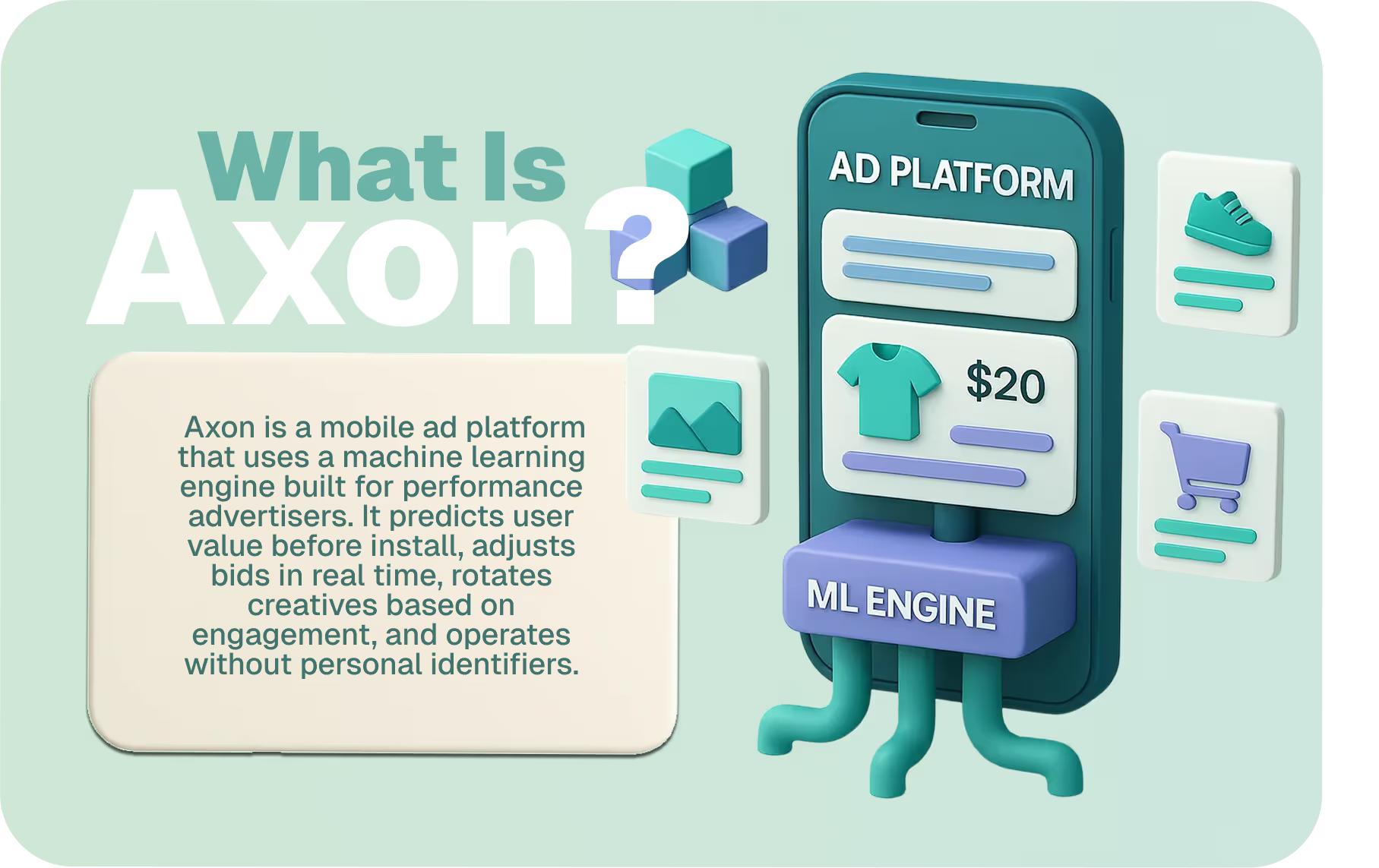
Unlike platforms that rely on manual targeting or static rules, Axon adapts dynamically. It ingests pixel-based data from your website, models user behavior, and optimizes toward your business goals whether that’s ROAS, CPP, or purchase volume.
This guide walks through how to use Axon effectively for web campaigns, including setup, creative strategy, reporting, and optimization best practices.
Setting Up a Web Campaign in Axon
1. Choose Your Optimization Goal
Axon supports goal-based optimization. For web advertisers, the most relevant goals are:
- ROAS (Return on Ad Spend): Ideal for revenue-driven campaigns
- CPP (Cost Per Purchase): Useful for controlling acquisition costs
Each campaign should be configured around a single goal. Axon’s engine will automatically adjust bidding and delivery to maximize performance against that target.
Install the Axon Pixel and Configure the Conversions API
Axon’s optimization depends on high-quality conversion signals. For web campaigns, this means installing the Axon pixel across your site and wiring server-side events via the Conversions API to improve reliability and attribution.
Place the pixel on all pages that indicate user intent and funnel progression: product detail pages, checkout pages, and purchase-confirmation pages. Ensure purchase events include revenue values so the platform can model conversion value for ROAS campaigns. The Conversions API (supported by Axon partners today) complements the pixel by sending server-side events (purchases, add-to-cart, subscription starts) which reduce signal loss and improve event fidelity.
Axon uses aggregated, anonymized signals — not individual identifiers — to model outcomes. Before launching, validate that events are firing correctly, revenue mapping is accurate, and test flows track expected conversions. Incomplete or inconsistent event data will limit Axon’s ability to learn and optimize.
Creative Strategy: Give the System Good Inputs
Creative quality and variety are central to winning campaigns. Axon’s creative intelligence continuously evaluates variants and reallocates delivery toward the assets that produce the strongest downstream conversion signals. To accelerate learning, provide diverse, mobile-first assets that are tightly aligned to your landing experience.
Effective creative practices for ecommerce campaigns include:
- Lead with a single, clear value proposition and an offer-driven CTA (for example, “Get 20% Off” or “Shop the New Collection”).
- Use product-in-context or lifestyle visuals that show use and benefit rather than abstract branding alone.
- Create a video (30-60 seconds) demonstrating product benefits or quick UGC-style testimonials, since these often drive higher engagement and conversion.
- Advertisers should always use captions. Videos with captions overwhelmingly outperform videos without captions.
- Maintain message parity between ad and landing page to reduce drop-off.
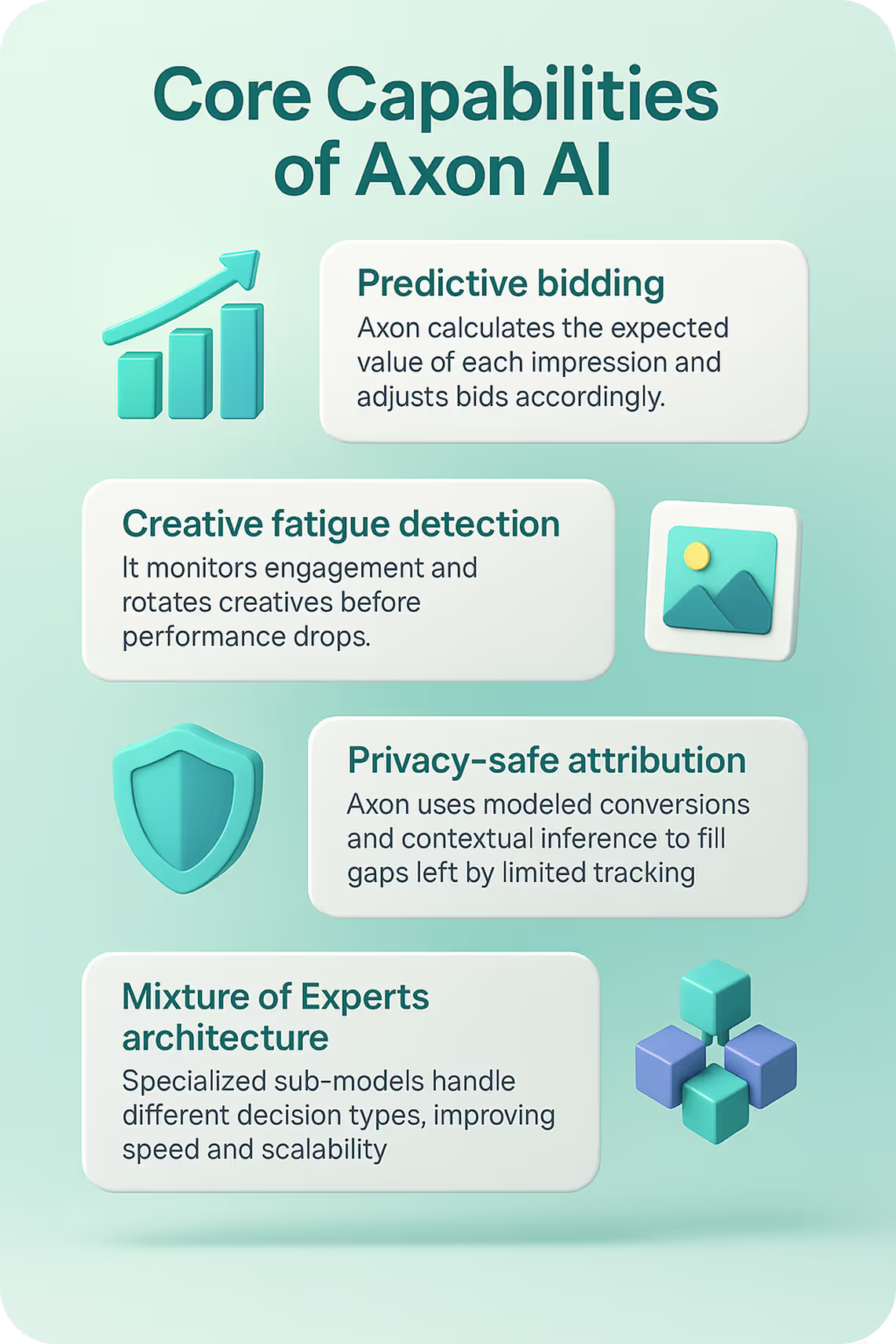
Rotate and refresh creatives regularly — a cadence of one to two weeks during peak promotional periods helps avoid fatigue. While Axon will automatically suppress underperforming variants, proactively introducing fresh assets sustains engagement signals and prevents signal decay.
Value-Based Bidding: Align Spend to Predicted Value
Axon’s predictive bidding approach evaluates the expected value of each impression and adjusts bids in real time. This is different from manual CPC/CPM bidding: you don’t set micro-bids, you set the objective and let the system allocate spend toward impressions that are most likely to deliver that objective.
For ROAS campaigns, Axon bids more aggressively on impressions predicted to lead to higher purchase value. For CPP campaigns, it focuses on impressions that produce conversions at lower cost. During the initial learning phase (typically three to five days), keep budgets stable and avoid frequent rule changes. Start with a conservative budget, observe early performance, and scale gradually once the model shows consistent results.
Funnel-Focused Creative Segmentation (Without Manual Audiences)
Axon does not support manual audience segmentation or audience uploads. Instead, you can guide learning by tailoring creatives to specific funnel intents. Provide content that maps to top-, mid-, and bottom-funnel behaviors so the model can learn which creative-to-context combinations drive conversions.
- Top-funnel creatives focus on brand awareness and product discovery.
- Mid-funnel creatives emphasize proof points, testimonials, and comparisons.
- Bottom-funnel creatives drive urgency with offers, scarcity, or time-limited discounts.
Even though targeting is automated, this creative-to-funnel alignment helps Axon correlate creative signals with user intent and accelerate optimization.
Attribution, Privacy, and Compliance
Axon is built for a privacy-first world. Web campaigns rely on pixel and server-side signals rather than IDFA/GAID-style identifiers. The platform uses aggregated and anonymized inputs to model outcomes while complying with GDPR, CCPA, and other major privacy frameworks. Advertisers remain responsible for collecting consent and passing consent flags correctly to the pixel and API. Correct consent handling ensures both legal compliance and accurate signal capture.
Note that attribution for web is pixel-based; methods like SKAN are relevant only for app-install workflows. For web advertisers using Axon, clean pixel and server-side implementations are critical to avoid attribution gaps.
Reporting, Exports, and Diagnostic Metrics
Axon’s reporting offers direct visibility into primary outcomes (ROAS, CPP) and supporting KPIs such as conversion rate, click-through rate, and average order value. Use these metrics to diagnose where performance is lagging — creative, funnel, or signal quality — and to prioritize remediation.
Export options and connectors enable deeper analysis in BI tools. Common flows include exporting campaign-level data to Looker Studio, BigQuery, Snowflake, or Power BI to combine ad outcomes with on-site analytics and merchant systems. These exports help teams reconcile revenue and validate that revenue mapping aligns to business systems.
Advanced Use Cases: Custom Goals and Global Scaling
Axon supports custom conversion goals, so advertisers can optimize toward events beyond standard purchases: subscription starts, trial activations, checkout initiations, and similar funnel milestones. Define these events in your pixel or through the Conversions API, and Axon will model the downstream value accordingly.
The platform automatically adjusts bids and delivery across regions, devices, and time windows; use creative localization and offer testing in top markets to maximize yield.
Troubleshooting Common Issues
If ROAS is flat or degrading, start with the fundamentals: confirm pixel events and revenue values and refresh creatives to combat fatigue. If CPP is higher than expected, re-evaluate the campaign objective and consider narrowing creative focus. When creative engagement is low, test new formats and refocus messaging to better match the funnel stage. Axon learns quickly when inputs are clean; maintaining consistent event tracking and frequent creative refreshes will accelerate improvements.
Final Thoughts: Scaling Web Growth with Axon
Axon by AppLovin offers ecommerce and DTC advertisers a smarter way to scale. It’s not about chasing clicks or manually adjusting bids — it’s about letting machine learning do the heavy lifting while you focus on strategy.
If you’re launching a new product, scaling a storefront, or optimizing for ROAS, Axon gives you the infrastructure to move faster and spend smarter. It’s built for privacy, designed for performance, and engineered to adapt.
Start with clear goals. Feed it clean signals. Let it learn. Then scale — confidently, creatively, and efficiently.
Explore Axon now!
FAQs About Axon for Web Advertisers
How does Axon optimize for ROAS on web campaigns? Axon uses pixel-based conversion signals to model purchase likelihood and adjust bidding in real time.
Can I use Axon for retargeting? Axon does not support traditional retargeting or audience uploads. It optimizes toward conversion goals using aggregated behavioral signals.
What creative formats work best for ecommerce brands? Short-form video, static images with strong CTAs, and interactive end cards tend to perform well. Axon automatically rotates creatives based on performance.
Is Axon compliant with privacy regulations? Yes. Axon uses aggregated, anonymized signals and does not rely on personal identifiers. It’s compliant with GDPR, ATT, and other global standards.
Can I optimize for multiple goals in one campaign? No. Each Axon campaign is configured around a single goal — either ROAS or CPP — to ensure clean optimization.
Does Axon support manual targeting or audience segmentation? No. Other than country targeting, Axon’s targeting is fully automated and based on contextual and behavioral signals. Advertisers cannot manually segment or upload audiences.
How often should I refresh creatives? Creative fatigue can set in quickly. Refresh assets every 1–2 weeks, especially during high-traffic periods or promotional cycles.
Can I run Axon campaigns alongside other platforms? Yes. Many advertisers use Axon alongside Meta, Google, and TikTok. Axon’s predictive bidding and creative automation make it a strong complement to manual platforms.
See real in-app advertising examples from ecommerce brands running ads inside mobile games on Axon by AppLovin.

Mobile game advertising reaches over 1 billion daily users with full-screen, unskippable ads. Here is why ecommerce brands are finding new customers on Axon by AppLovin and how to set up for real results.
.png)