

Axon by AppLovin vs ironSource: Which Ad Platform Drives Better ROAS for Web Advertisers
Axon by AppLovin vs ironSource: Which Ad Platform Drives Better ROAS for Web Advertisers?
A Practical Comparison for Ecommerce and DTC Growth
Performance marketers have no shortage of tools and channels to explore but not all ad platforms are built for the same kind of growth. For ecommerce and DTC brands running performance campaigns on the web, the goals are straightforward: drive purchases, improve ROAS, and scale efficiently while managing privacy limits and fragmented data signals.
Axon by Applovin and ironSource Ad network within Unity Grow are both built for mobile performance marketing, yet each platform takes a distinct path in how it optimizes campaigns and interprets user signals. Both offer automation, creative management, and optimization engines, but they approach web and app campaigns differently. Those differences matter for brands that rely on accurate attribution and consistent purchase data.
Understanding how each platform handles signals, attribution, and creative decisioning is key to choosing the right stack for long-term performance — especially as the lines between web and app ecosystems continue to blur.
Start Here: What Web Advertisers Actually Need
For brands focused on driving sales through their websites (vs mobile downloads or lead generation), effective advertising comes down to accurate signals, flexible bidding, and creative testing that scales.
- Optimize for ROAS (Return on Ad Spend) and CPP (Cost Per Purchase)
- Automate delivery and creative rotation without manual toggling
- Avoid audience uploads and waterfall configurations
- Stay compliant with privacy regulations like GDPR, CCPA, and ATT
- Scale performance using pixel-based signals — not app SDK data
Axon is designed for this environment. It’s a demand-side platform powered by machine learning, built to help advertisers optimize delivery, bidding, and creative performance using real-time, privacy-safe signals from their websites.
ironSource, by contrast, is a publisher-side monetization platform. It’s built for app developers managing ad demand through mediation — not for advertisers running web campaigns.
How to Use Axon for Web Campaigns
Axon supports goal-based optimization and automated creative rotation for web advertisers. Here’s how to get started:
1. Choose Your Optimization Goal
Axon supports two primary goals:
- ROAS: Ideal for revenue-driven campaigns
- CPP: Useful for controlling acquisition costs
Once selected, Axon automatically adjusts bidding and delivery to maximize performance against that goal. There’s no need to manually adjust bids or segment audiences — Axon handles it dynamically.
2. Install the Axon Pixel
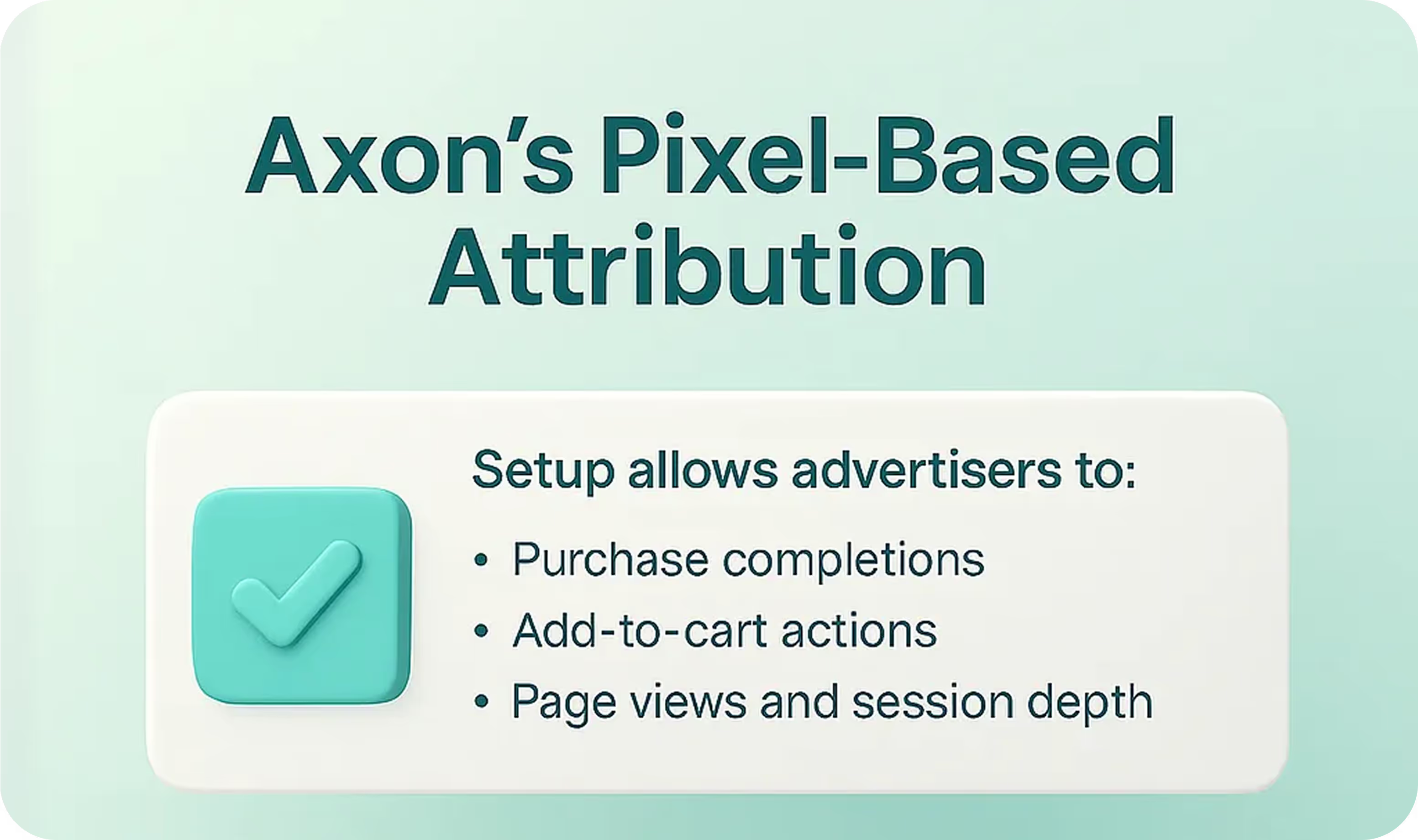
The Axon pixel is your foundation. Once installed on your website, it tracks:
- Purchase completions
- Add-to-cart actions
- Page views and session depth
These signals are anonymized and aggregated, then fed into Axon’s machine learning engine. The system uses this data to model conversion likelihood and adjust delivery in real time — no cookies, no user IDs, no manual tagging.
Use the Conversions API for server-side reliability, especially in cookie-restricted environments.
3. Upload Diverse Creatives
Axon continuously evaluates creative performance and rotates assets based on engagement. Upload a mix of:
- Static images with strong CTAs
- Short-form product videos
- Interactive overlays or end cards
Axon will test, prioritize, and suppress creatives automatically — no manual toggling required. Refresh assets regularly to support Axon’s learning cycles.
4. Monitor and Export Reporting
Use Axon’s reporting suite to track:
- ROAS and CPP by geo, device, and creative
- Engagement metrics across formats
- Conversion trends over time
Export data to Looker Studio, BigQuery, or Sheets using the Reporting API or connectors like Portable.io.
ROAS and Signal Optimization: Axon vs ironSource
When evaluating ad platforms for web campaigns, the ability to optimize spend based on real conversion signals is non-negotiable. ROAS and CPP are foundational metrics to any performance strategy for online brands and retailers.
Axon’s Predictive Bidding for Web
Axon’s bidding engine is built to optimize for outcomes over impressions. For ecommerce brands, that means every ad dollar is directed toward users most likely to convert, not just click.
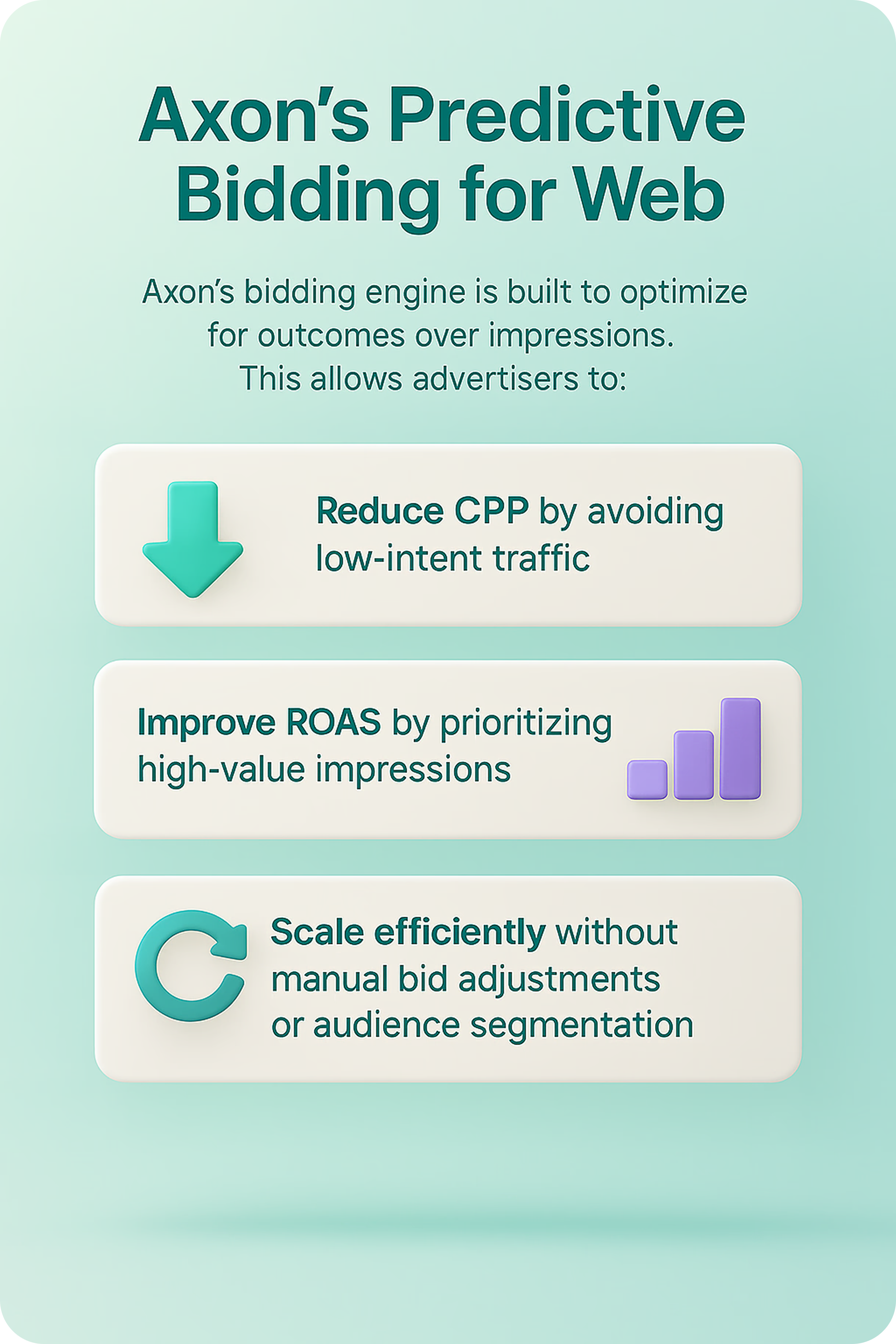
Using pixel-based conversion signals and contextual data (like device type, time of day, and engagement depth), Axon models the likelihood of purchase and adjusts bids dynamically. This allows advertisers to:
- Reduce CPP by avoiding low-intent traffic
- Improve ROAS by prioritizing high-value impressions
- Scale efficiently without manual bid adjustments or audience segmentation
Unlike platforms that rely on static rules or historical averages, Axon’s engine adapts in real time. If user behavior shifts — say, during a seasonal sale or product launch — Axon recalibrates instantly, ensuring your budget follows performance.
This is especially powerful for DTC and ecommerce brands with diverse product catalogs, fluctuating demand, and fast-moving promotional cycles.
ironSource’s Rule-Based Setup
ironSource’s bidding logic is designed for app monetization, not web advertising. It relies on manual waterfall configurations and rule-based delivery, which require constant tuning and don’t adapt to real-time user behavior.
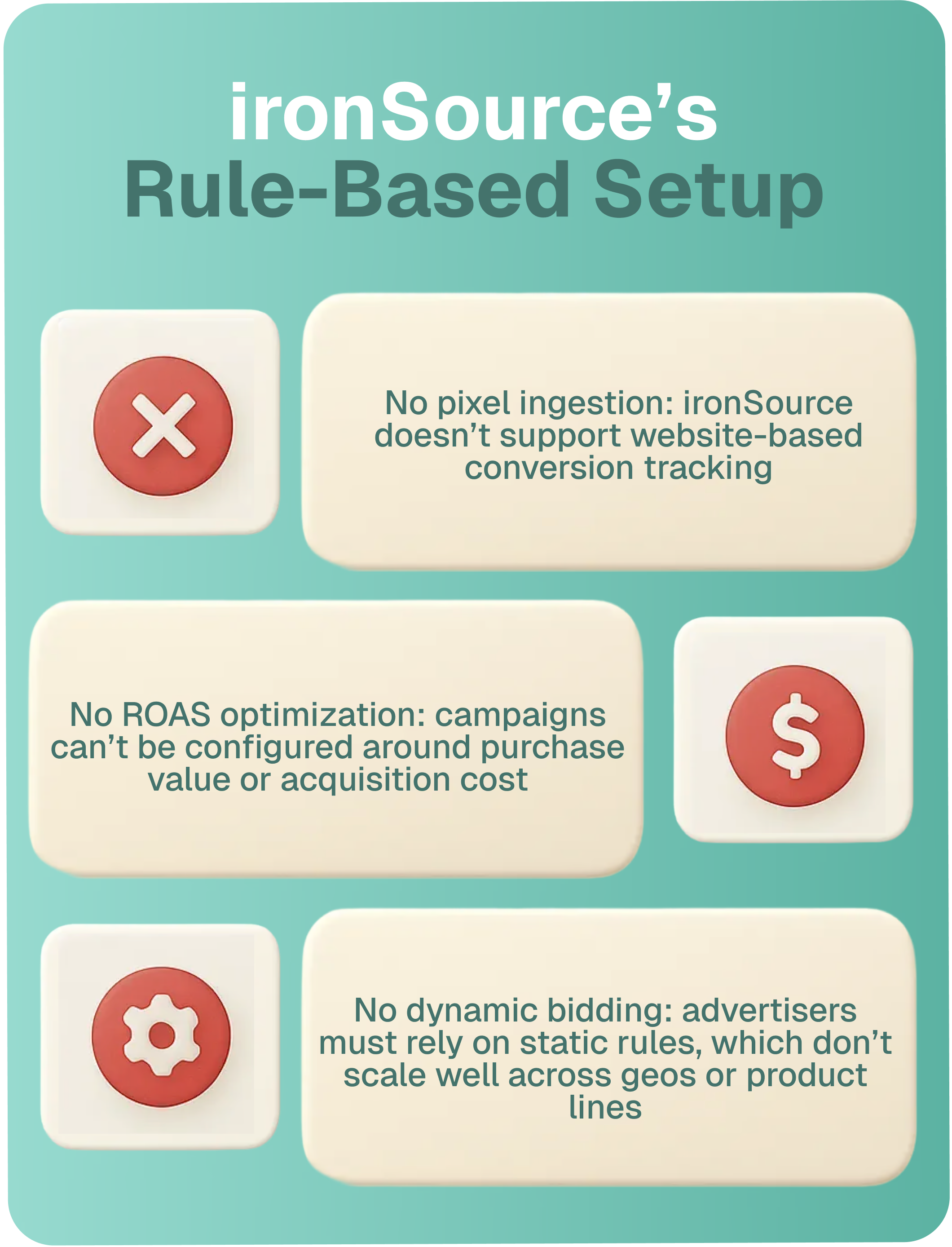
For web advertisers, this presents several limitations:
- No pixel ingestion: ironSource doesn’t support website-based conversion tracking
- No ROAS optimization: campaigns can’t be configured around purchase value or acquisition cost
- No dynamic bidding: advertisers must rely on static rules, which don’t scale well across geos or product lines
While ironSource offers control for app developers managing ad monetization, it lacks the predictive infrastructure needed to optimize ecommerce campaigns for performance.
Attribution and Privacy: What Matters for Web Campaigns
Attribution is considered the backbone of optimization. For web advertisers, understanding which signals are captured, how they’re modeled, and whether they comply with privacy standards is critical. This section explores how Axon and ironSource handle attribution and why only one is built to support web-based performance tracking.
Axon’s Pixel-Based Attribution
Axon’s attribution system for web campaigns is built around its pixel and Conversions API. This setup allows advertisers to track:
- Purchase completions
- Add-to-cart actions
- Page views and session depth
These signals are anonymized, aggregated, and fed directly into Axon’s optimization engine. The result is:
- Full compliance with GDPR, CCPA, and other privacy regulations
- Resilience to signal loss, especially in cookie-restricted environments
- Transparent attribution, with clear visibility into which impressions drive actual conversions
Axon doesn’t rely on personal identifiers or user-level tracking. Instead, it uses contextual and behavioral signals to model conversion outcomes — making it future-proof as privacy standards evolve.
For ecommerce brands, this means you can optimize confidently, knowing your data is clean, compliant, and actionable.
ironSource’s SKAN Support (App Only)
ironSource supports SKAN attribution for mobile apps — a necessary feature for iOS campaigns post-IDFA. However, this has no relevance to web advertisers.
SKAN postbacks are not used in browser-based campaigns, and ironSource does not offer pixel-based attribution for websites. That means:
- No visibility into web-based purchase behavior
- No ability to optimize based on real-time conversion signals
- No support for server-side event ingestion
For advertisers focused on web growth, this is a critical gap. Attribution isn’t just a reporting layer — it’s the foundation of performance. And ironSource doesn’t offer the infrastructure to support it.
Creative Automation: Axon’s Advantage
Creative testing is often the bottleneck in performance campaigns. When you're managing dozens of SKUs, seasonal variants, and fast-moving promotions, manual rotation simply can't keep up. This section breaks down how Axon and ironSource approach creative delivery — and why Axon's automated system gives web advertisers the speed, scale, and precision they need to stay ahead.
Axon’s Real-Time Creative Rotation
Axon’s creative intelligence system is designed to maximize engagement and conversion — without manual testing. It ingests performance signals like click-through rate, scroll depth, and purchase behavior, then automatically:
- Suppresses fatigued creatives
- Prioritizes high-performing variants
- Allocates budget dynamically across formats and messages
This allows ecommerce brands to:
- Launch campaigns with multiple creative variants
- Let the system test and learn in real time
- Focus on strategy, not manual toggling
Whether you're launching new products, running time-sensitive campaigns, or managing multiple geographies, Axon automatically prioritizes creatives that perform best — reducing manual oversight and helping teams maintain consistent delivery quality.
ironSource’s Playworks and Manual A/B Testing
ironSource offers creative tooling through Playworks, which lets app developers build interactive ad experiences and run structured A/B tests. While powerful for studios with in-house creative teams, it’s:
- Manual: requires setup, monitoring, and interpretation
- Slower to iterate: especially for high-volume campaigns
- Less scalable: for ecommerce brands running dozens of SKUs or seasonal variants
For web advertisers managing multiple campaigns and creative variants, efficiency matters. Axon’s creative system is designed to reduce manual overhead by automatically prioritizing high-performing assets and suppressing fatigue — helping teams focus on strategy instead of micromanaging delivery.
Final Thoughts: Axon Is Built for Web Growth
If you’re an ecommerce brand or DTC advertiser focused on scaling web campaigns, the most important consideration is alignment with your goals. Axon is built to optimize for ROAS and CPP using real-time web signals, while ironSource is designed for app monetization. For web performance, the fit is clear.
ironSource is a powerful tool for app developers managing monetization through SDKs and mediation. But it lacks the infrastructure to support web advertisers — no pixel tracking, no ROAS optimization, no dynamic bidding, and no automated creative rotation.
Axon, by contrast, is purpose-built for web growth. It ingests pixel-based signals, models conversion outcomes, and automates delivery based on real-time performance. It’s privacy-safe, fast to deploy, and designed to help advertisers scale without manual overhead.
If your business runs on website conversions, Axon gives you:
- Predictive bidding that adapts to real user behavior
- Creative rotation that maximizes engagement and suppresses fatigue
- Attribution that’s transparent, compliant, and actionable
- A system that learns continuously — not one that waits for manual input
Axon is optimized for web advertising.👉 Learn more at axon.ai
FAQs for Web Advertisers
Can Axon optimize for ROAS and CPP on web campaigns? Yes. Axon uses pixel-based signals to model conversion value and optimize delivery in real time. You can choose ROAS to maximize revenue efficiency or CPP to control acquisition costs, and Axon will adjust bidding and creative rotation accordingly.
Does ironSource support web campaign optimization? No. ironSource is built for app monetization and does not support pixel-based web attribution or ROAS optimization. Its mediation tools are designed for SDK-based environments, not browser-based ecommerce flows.
How does Axon handle creative rotation? Axon automatically rotates creatives based on performance signals like engagement rate, scroll depth, and conversion likelihood. It suppresses fatigued assets and prioritizes top performers — no manual toggling or A/B testing required.
Is Axon compliant with privacy regulations? Yes. Axon uses aggregated, anonymized signals and complies with GDPR, CCPA, ATT, and other global standards. It does not rely on personal identifiers like IDFA or GAID, making it suitable for privacy-first environments.
Can I use ironSource and Axon together? Only if you’re running both app monetization and web advertising. For ecommerce brands focused on website growth, Axon is the more relevant platform. It’s built to ingest pixel signals, optimize for purchase outcomes, and automate delivery across web campaigns.
Does Axon require manual audience segmentation? No. Axon uses behavioral and contextual signals to optimize delivery. There’s no need to upload audiences or define targeting rules — the system learns from live performance and adapts automatically.
Can Axon support seasonal or promotional campaigns? Yes. Axon’s predictive bidding and creative intelligence are especially effective during high-velocity periods like product launches, flash sales, or holiday campaigns. It adapts in real time to shifting user behavior and demand.
Sources & References
- AppLovin MAX Mediation Overview
- AppLovin SKAN Attribution Guide
- AppLovin Privacy & SDK Integration Guide
- Unity LevelPlay (ironSource) Overview
- Teqblaze – Mobile App Monetization for Publishers
- AdExchanger – Inside Axon’s Algorithm
- Yahoo Finance – AppLovin’s Quiet Domination

See real in-app advertising examples from ecommerce brands running ads inside mobile games on Axon by AppLovin.

Mobile game advertising reaches over 1 billion daily users with full-screen, unskippable ads. Here is why ecommerce brands are finding new customers on Axon by AppLovin and how to set up for real results.
.png)