

Axon by Applovin vs Meta Ads: Which AI Ad Platform Delivers Better ROAS?
Axon by AppLovin vs Meta Ads: Which AI Ad Platform Performs Better?
A Practical Comparison for Performance-Driven Campaigns
Meta is still the dominant ad platform for digital marketers, offering unmatched reach, powerful targeting, and a well-established ecosystem. But as competition has intensified and its algorithms continue to result in unpredictable performance, many advertisers are seeing diminishing returns and looking for alternatives.
Obviously, at Axon Insiders, we’re big fans of Axon. But this isn’t about picking sides. It’s about understanding how Meta and Axon approach advertising differently — and when it makes sense to use both.
Axon by AppLovin focuses on predictive bidding, creative automation, and privacy-safe optimization for mobile-first performance. Meta, meanwhile, continues to lead in scale and audience sophistication. This guide compares both platforms across campaign setup, optimization, attribution, and creative performance so marketers can decide which system best fits their goals.
What Performance Marketers Actually Need
If you're running performance campaigns, your priorities are clear:
- Drive conversions efficiently
- Improve ROAS and control CPP or CPI
- Adapt to signal loss and privacy constraints
- Maintain visibility into attribution and spend
- Automate away any painful manual tasks
Axon is built for this environment. It’s a demand-side platform powered by machine learning, designed to optimize ad delivery, bidding, and creative performance using real-time signals. Meta Ads remains the dominant social reach channel, but in environments where identifiers are limited and privacy constraints are rising, its targeting and attribution models are becoming more challenging to rely on — especially when advertisers are focused on tightly measurable outcomes.
Axon vs Meta Ads
To make an informed decision, it helps to see how each platform handles the core components of performance marketing. Below is a breakdown of how Axon and Meta Ads differ across targeting, bidding, attribution, creative rotation, and audience access.
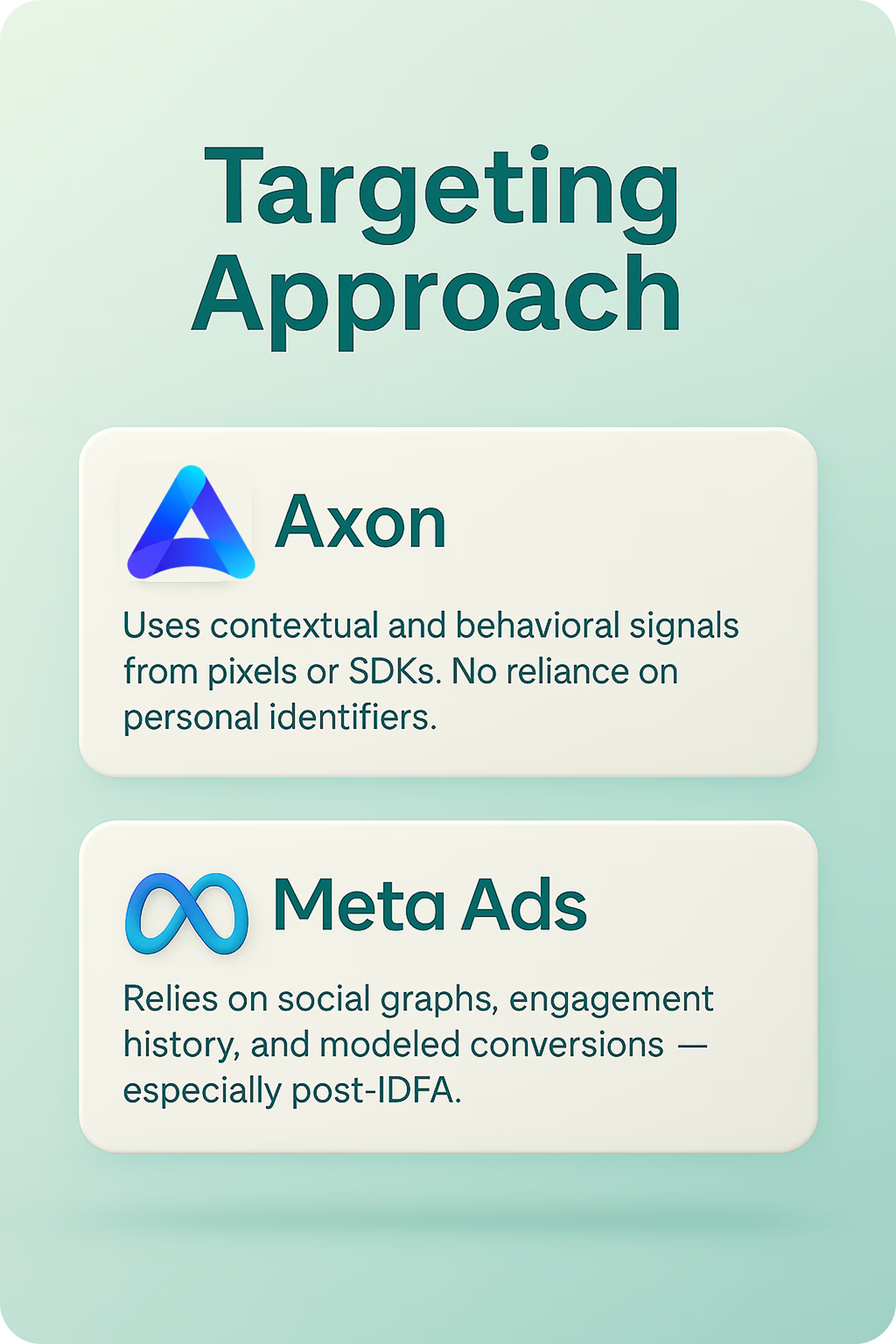
Targeting Approach
- Axon: Uses contextual and behavioral signals from pixels or SDKs. No reliance on personal identifiers.
- Meta Ads: Relies on social graphs, engagement history, and modeled conversions — especially post-IDFA.
Bidding Logic
- Axon: Predictive bidding based on real-time conversion probability. Adjusts spend dynamically to maximize ROAS or minimize CPP/CPI.
- Meta Ads: Goal-based bidding with limited transparency. Performance can fluctuate due to reliance on modeled conversions.
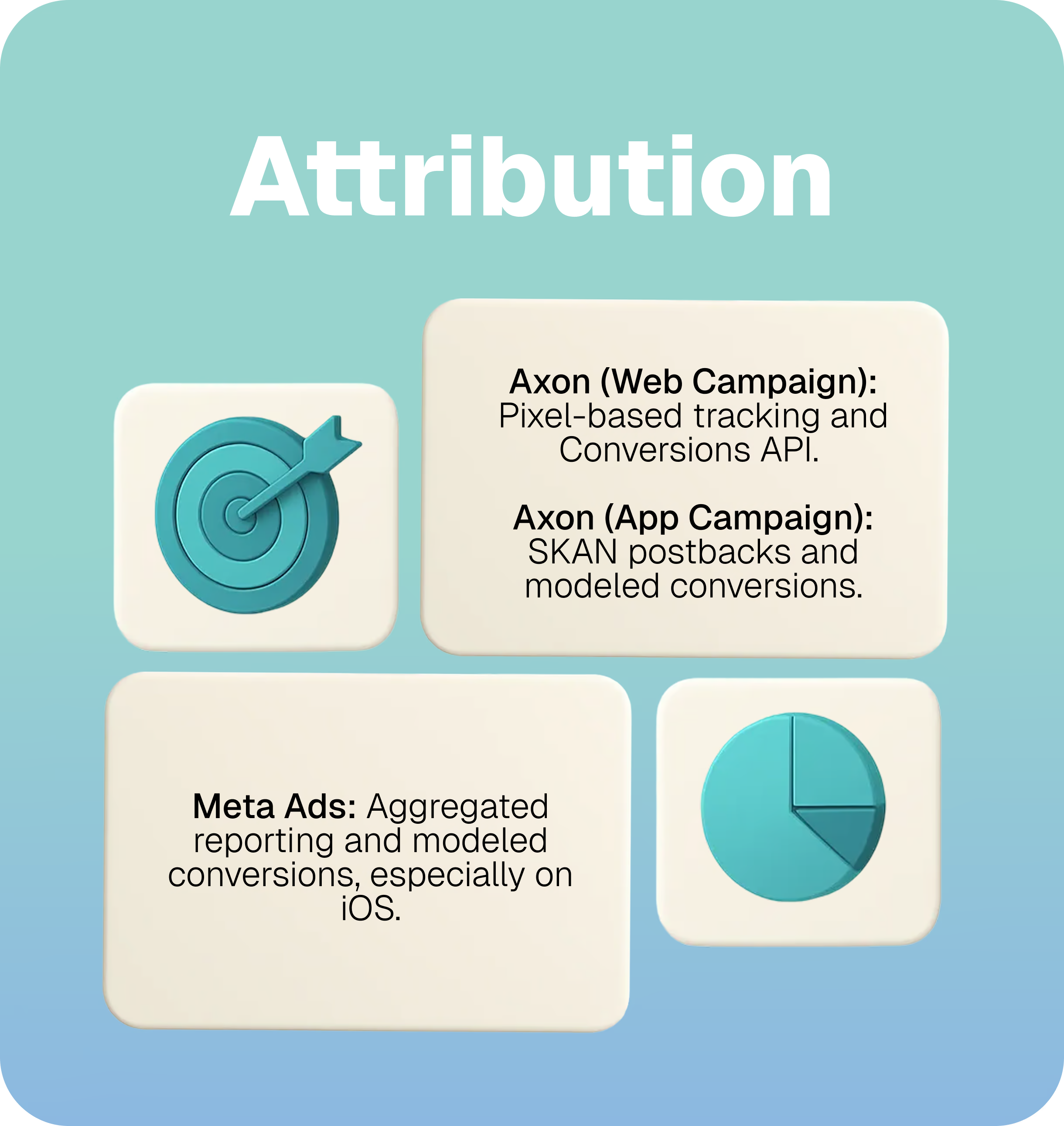
Attribution
- Axon (Web Campaign): Pixel-based tracking and Conversions API.
- Axon (App Campaign): SKAN postbacks and modeled conversions.
- Meta Ads: Aggregated reporting and modeled conversions, especially on iOS.
Creative Optimization
- Axon: Real-time creative rotation based on engagement and conversion signals. Suppresses fatigue and prioritizes top performers automatically.
- Meta Ads: Advantage+ automation simplifies setup but offers limited visibility into performance drivers.
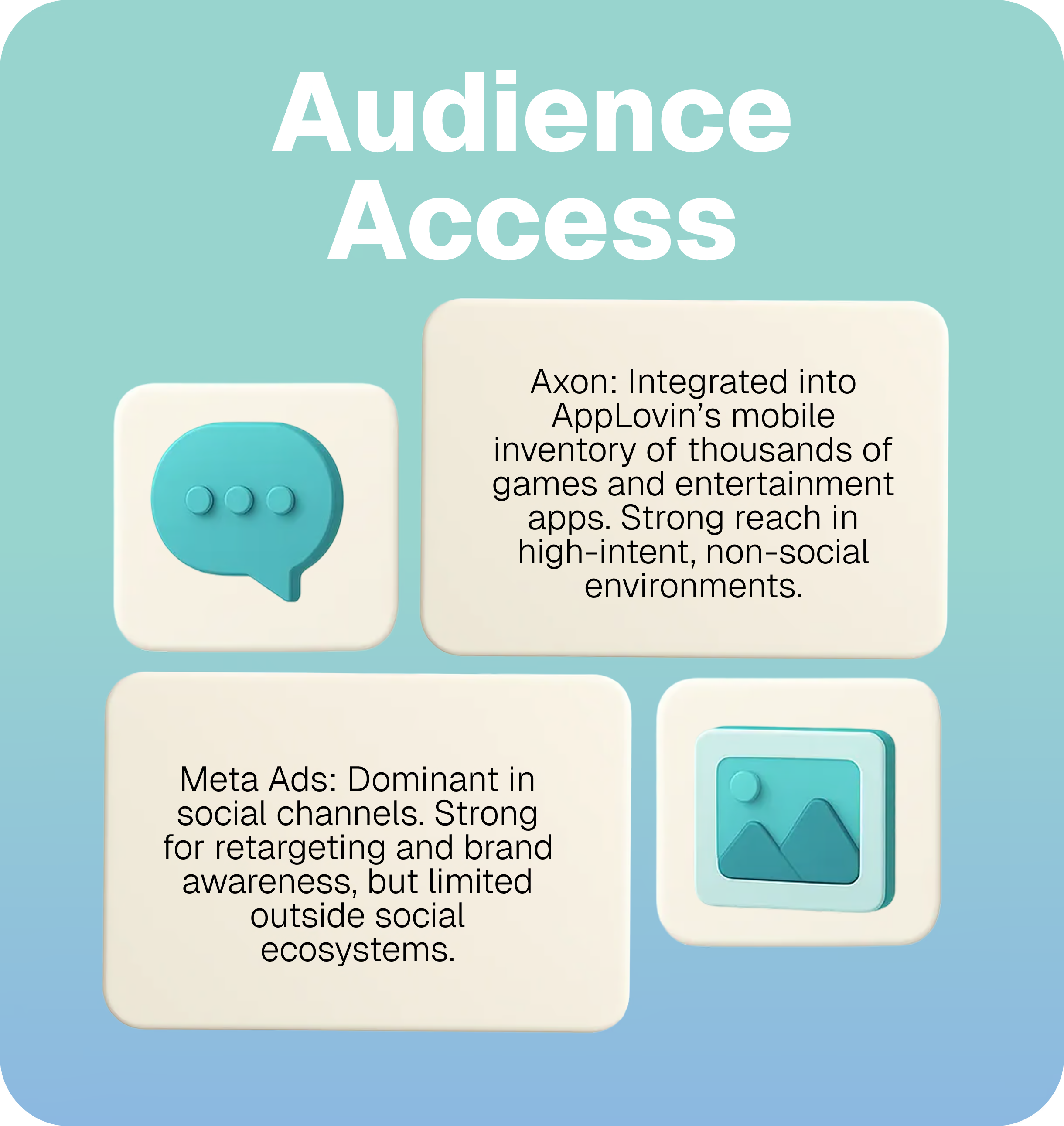
Audience Access
- Axon: Integrated into AppLovin’s mobile inventory of thousands of games and entertainment apps. Strong reach in high-intent, non-social environments.
- Meta Ads: Dominant in social channels. Strong for retargeting and brand awareness, but limited outside social ecosystems.
How Axon Works for Web and App Campaigns
Axon supports both web and mobile app campaigns using the same optimization engine. Whether your signals come from a website pixel or an SDK, Axon adapts in real time to help you scale efficiently and hit performance goals regardless of platform.
1. Choose Your Optimization Goal
Axon campaigns are goal-based. You select one performance objective, and the system optimizes delivery and bidding accordingly:
- ROAS (Return on Ad Spend): Axon models purchase likelihood and adjusts bids to maximize return relative to spend.
- CPP (Cost Per Purchase): Axon minimizes cost per conversion while maintaining quality.
- CPI (Cost Per Install): For app campaigns, Axon optimizes for install volume while modeling downstream value like retention and LTV.
Once your goal is selected, Axon continuously adjusts delivery to maximize performance — no manual bid tuning required.
2. Install the Axon Pixel or SDK
To enable optimization, Axon needs conversion signals. These are collected differently depending on campaign type:
- Web campaigns:
- Install the Axon pixel on product, checkout, and confirmation pages
- Use the Conversions API to pass server-side events like purchases and add-to-cart actions
- Signals are anonymized and aggregated to model conversion likelihood
- App campaigns:
- Integrate the Axon SDK to track installs, post-install events, and retention
- SKAN postbacks are ingested for iOS campaigns, with modeled conversions filling gaps
Axon does not rely on personal identifiers like IDFA or GAID. Instead, it uses contextual and behavioral signals to optimize delivery — making it resilient to privacy changes and signal loss.
3. Upload Diverse Creatives
Axon’s creative intelligence system automatically rotates and prioritizes ad variants based on real-time performance. To support this, upload a mix of formats:
- Static images with clear CTAs
- Short-form videos (30-60 seconds)
- Interactive overlays or end cards
- Catalog Ads (pixel, feed, or Shopify integration)
Best practices:
- Upload 3–5 variants per campaign
- Refresh creatives every 1–2 weeks
- Align messaging with funnel stage (awareness, consideration, conversion)
Axon suppresses underperforming creatives and shifts budget toward top performers — no manual toggling or A/B testing required.
4. Monitor and Export Reporting
Axon’s reporting suite provides granular visibility across geo, device, creative, and contextual segments. You can track:
- ROAS and CPP by region and device
- Engagement metrics like CTR, conversion rate, and time-to-purchase
- Creative performance across formats
For deeper analysis, export data using:
- Axon Reporting API
- Connectors like Portable.io or Supermetrics
- BI tools like Looker Studio, BigQuery, Snowflake, or Sheets
This allows you to build dashboards, compare Axon performance against other platforms, and align campaign outcomes with business KPIs.
Where Axon Outperforms Meta Ads
Axon is designed for performance-driven campaigns. It optimizes based on predicted value and real conversion outcomes — not vanity metrics. Whether your signals come from a website pixel or SDK events, Axon’s machine learning engine adapts quickly to changing behavior and signal quality.
Meta Ads still excels at brand awareness and retargeting, especially for social-first audiences. But when every impression needs to drive measurable value, Axon’s predictive bidding and creative automation offer more control and consistency.
Audience Access: Why Axon Reaches What Meta Can’t
Meta’s reach is built on social graphs and engagement history. This works well for lifestyle brands and influencer-driven campaigns. But for advertisers targeting casual mobile gaming audiences or entertainment apps, Meta often has limited visibility.
Axon is integrated into AppLovin’s owned and operated inventory: more than 100,000 apps, of mobile games and entertainment apps. This gives advertisers access to high-intent users in environments where Meta doesn’t reach. For ecommerce brands, this means reaching shoppers during gameplay moments when attention is high and conversion potential is strong.
ROAS, Budget Efficiency, and Attribution
ROAS, budget control, and attribution are the pillars of performance marketing. When evaluating ad platforms, it’s important to understand not just what they report, but how they calculate value, allocate spend, and adapt to privacy constraints. The following breakdown highlights how Axon and Meta differ in their approach to these fundamentals — and why those differences impact campaign efficiency.
ROAS Consistency Across Platforms
Axon maintains strong ROAS across iOS and Android. Its predictive engine adapts to signal loss and privacy constraints using contextual and behavioral data. Meta relies heavily on modeled conversions, especially post-IDFA, which can lead to volatility and reduced accuracy.
Budget Efficiency
Axon calculates the predicted value of each impression and adjusts bids accordingly. That means:
- Lower CPP for ecommerce brands
- Lower CPI for app campaigns
- Fewer wasted impressions
Meta’s CPMs continue to rise, but performance doesn’t always follow. With limited visibility into why certain creatives or audiences are prioritized, advertisers often feel like they’re guessing.
Attribution Context
- Axon (Web): Pixel-based tracking and Conversions API
- Axon (App): SKAN postbacks and modeled conversions
- Meta: Modeled conversions and aggregated reporting
Axon’s attribution is transparent and adaptable. Meta’s is increasingly opaque, especially on iOS.
Creative Optimization: Automation That Actually Works
Creative performance can make or break a campaign. This section explores how each platform handles creative delivery — and why automation matters when scaling across formats and audiences.
Axon’s Real-Time Creative Rotation
Axon tracks engagement signals like scrolls, taps, and conversions, then prioritizes variants that drive results. If a creative starts to fatigue, Axon shifts budget instantly. This allows advertisers to:
- Launch campaigns with multiple variants
- Let the system test and learn in real time
- Focus on strategy, not manual toggling
Meta’s Advantage+ Limitations
Meta’s Advantage+ automation offers simplicity, but limited visibility. You set your goal, upload creatives, and rely on the system to make decisions. If performance dips, there’s little insight into why.
With Axon, you get:
- Real-time creative rotation
- Performance-based prioritization
- Clear reporting on what’s working and why
FAQs: Axon vs Meta Ads
Can Axon optimize for ROAS and CPP? Yes. Axon supports ROAS and CPP optimization using pixel-based or SDK signals.
Does Axon support creative automation? Yes. Axon rotates creatives based on real-time performance signals — no manual testing required.
Is Axon affected by iOS privacy changes? Axon is built for contextual and behavioral targeting, making it more resilient to signal loss and SKAN limitations.
Can Axon be used for web campaigns? Absolutely. Axon supports ecommerce and DTC campaigns using pixel-based tracking and Conversions API.
What makes Axon better than Meta Ads for performance marketing? Axon delivers smarter bidding, clearer attribution, and better access to high-intent audiences — especially in mobile gaming environments where Meta has limited reach.
Final Thoughts: Built for What’s Next
If you’re focused on performance — not just reach — Axon is the more relevant platform. It’s built to ingest real signals, optimize for ROAS, and automate delivery across web and app campaigns. Meta Ads remains strong for social engagement, but Axon offers more precision, transparency, and control.
For advertisers scaling storefronts, launching apps, or optimizing for purchase efficiency, Axon provides:
- Predictive bidding based on conversion likelihood
- Automated creative rotation that adapts in real time
- Transparent reporting and attribution
- Access to audiences beyond social platforms
Explore Axon at axon.ai
- AppLovin SKAN Attribution Guide
- AppLovin Privacy & SDK Integration Guide
- AppLovin MAX Mediation Overview
- AdExchanger – Inside Axon’s Algorithm
- Yahoo Finance – AppLovin’s Quiet Domination
- Meta Advantage+ Shopping Campaigns Overview
See real in-app advertising examples from ecommerce brands running ads inside mobile games on Axon by AppLovin.

Mobile game advertising reaches over 1 billion daily users with full-screen, unskippable ads. Here is why ecommerce brands are finding new customers on Axon by AppLovin and how to set up for real results.
.png)