
Mobile Ad Optimization: How Axon by AppLovin Maximizes ROI Across Devices
Mobile Ad Optimization: What It Means, Why It Matters, and Where It’s Going
Mobile ad optimization is the practice of making mobile campaigns perform in a world where signals are messy, attribution is limited, and user attention is split across apps, feeds, and screens. It’s not a single lever or something that can be achieved with a push of a single button. It is a set of actions that increase the chance that each mobile impression leads to a business result.
On mobile, users scroll faster, watch silently, and bounce quickly from page to page. Any weakness in targeting, bidding, or creative shows up immediately as higher CPI, higher CPP, or lower ROAS. Optimization solves that by using real user behavior to guide delivery. It applies to app install campaigns and to mobile web campaigns that drive purchases. In both cases you are telling the ad system which user actions matter and asking it to find more situations like that.
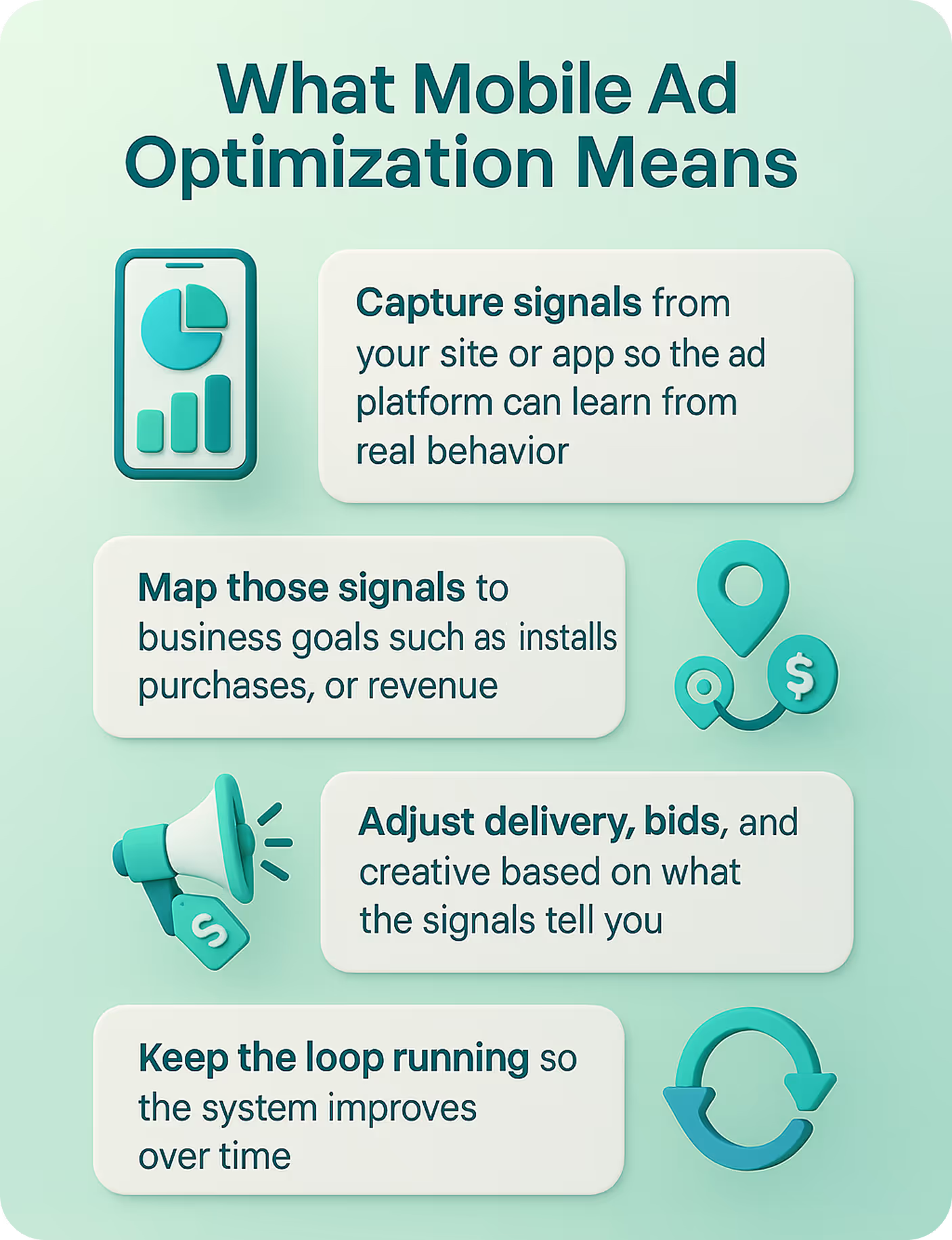
In practice, mobile ad optimization means you:
- Capture signals from your site or app so the ad platform can learn from real behavior
- Map those signals to business goals such as installs, purchases, or revenue (the signals should map to Axon's standard events. )
- Adjust delivery, bids, and creative based on what the signals tell you
- Keep the loop running so the system improves over time
When you do this consistently, the ad system has enough data to tell the difference between a casual scroller and a user who is likely to buy. That is the point where scaling spend starts to work, because each new impression has a higher chance of landing in front of someone who fits the conversion pattern you already taught the system.
Why Optimization Matters Now
Mobile ad budgets are still growing, but audiences are not getting easier to reach. Users are spending time in more apps, on more devices, and inside experiences that do not always allow you to track them directly. Apple’s ATT, SKAN, and browser privacy changes have reduced how much audience-level data you actually see. Delivery inside platforms like Meta is also more opaque than it was before. All of that makes standard campaign setups less dependable than they used to be.
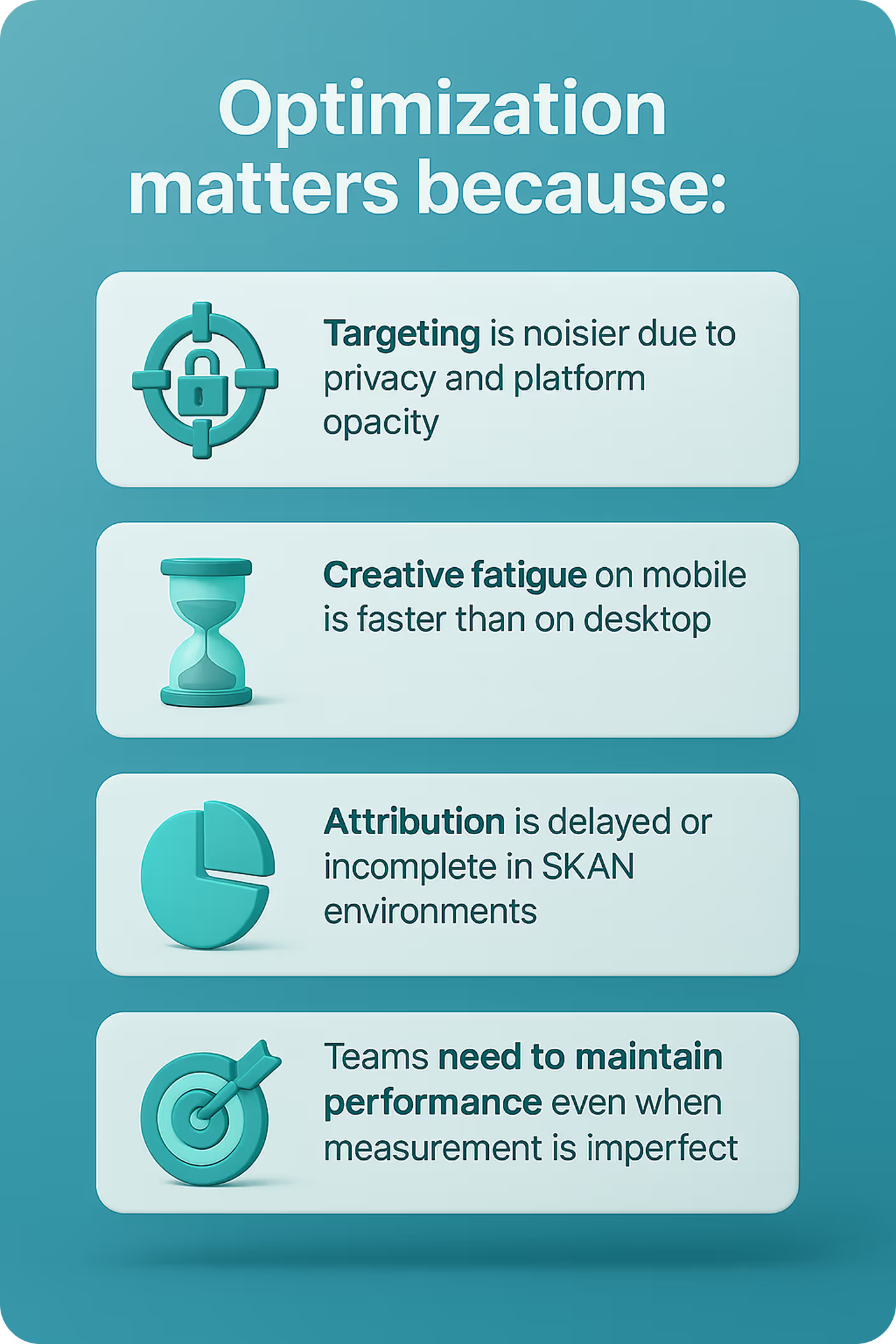
Right now, optimization matters because:
- Targeting is noisier due to privacy and platform opacity
- Creative fatigue on mobile is faster than on desktop
- Attribution is delayed or incomplete in SKAN environments
- Teams need to maintain performance even when measurement is imperfect
Optimization gives you a way to keep campaigns performing even when the underlying signals are weaker. Instead of depending on who the user is, you focus on what the user did and what outcome you want. That shift is what makes modern mobile performance programs more resilient to platform changes.
Where Axon by AppLovin Fits
Once you understand that mobile campaigns need to be outcome based, it becomes clear why a system like Axon is useful. Axon is built for environments where you do not have perfect user-level data but still need the ad platform to make good decisions. Instead of relying on manual audience lists or granular identifiers, it uses contextual and behavioral signals that are present on every impression. It predicts which impressions are likely to convert and spends more on those. It also automates creative rotation so weak assets do not drag down performance.
Think of the split like this:
- You provide goals, signals, and assets
- Axon provides real time decisioning, bidding, and rotation
- Together you get a mobile campaign that keeps learning even when data is incomplete
Because Axon was designed for privacy first conditions, it is less fragile than setups that depend on retargeting pools or long lists of rules. You can keep focusing on offers, landing pages, and new creatives while Axon handles the delivery logic at the impression level.
Key Metrics: CPI, CPP, ROAS
Optimization only works when the system knows what success looks like. Mobile advertisers usually work with three anchor metrics. CPI is used when the goal is app growth and new installs. CPP is used when the goal is to drive purchases on a mobile site. ROAS is used when the brand wants to favor higher value conversions over lower value ones. Picking the right one tells the model what to chase.
The metrics to anchor on:
- CPP (Cost Per Purchase) for ecommerce and DTC brands driving site sales
- ROAS (Return on Ad Spend) when you want the system to prioritize higher value conversions
When you pick the right metric, you can also write cleaner reports and catch problems sooner. For example, if CPP starts to climb, you know to look at landing pages, creative, or signal quality. If ROAS is flat while spend rises, that means the advertiser found stability while they scale. This is the kind of clarity Axon’s bidding engine depends on.
How Machine Learning Can Optimize Mobile Ad Performance
*These signals should map to Axon's standard events.
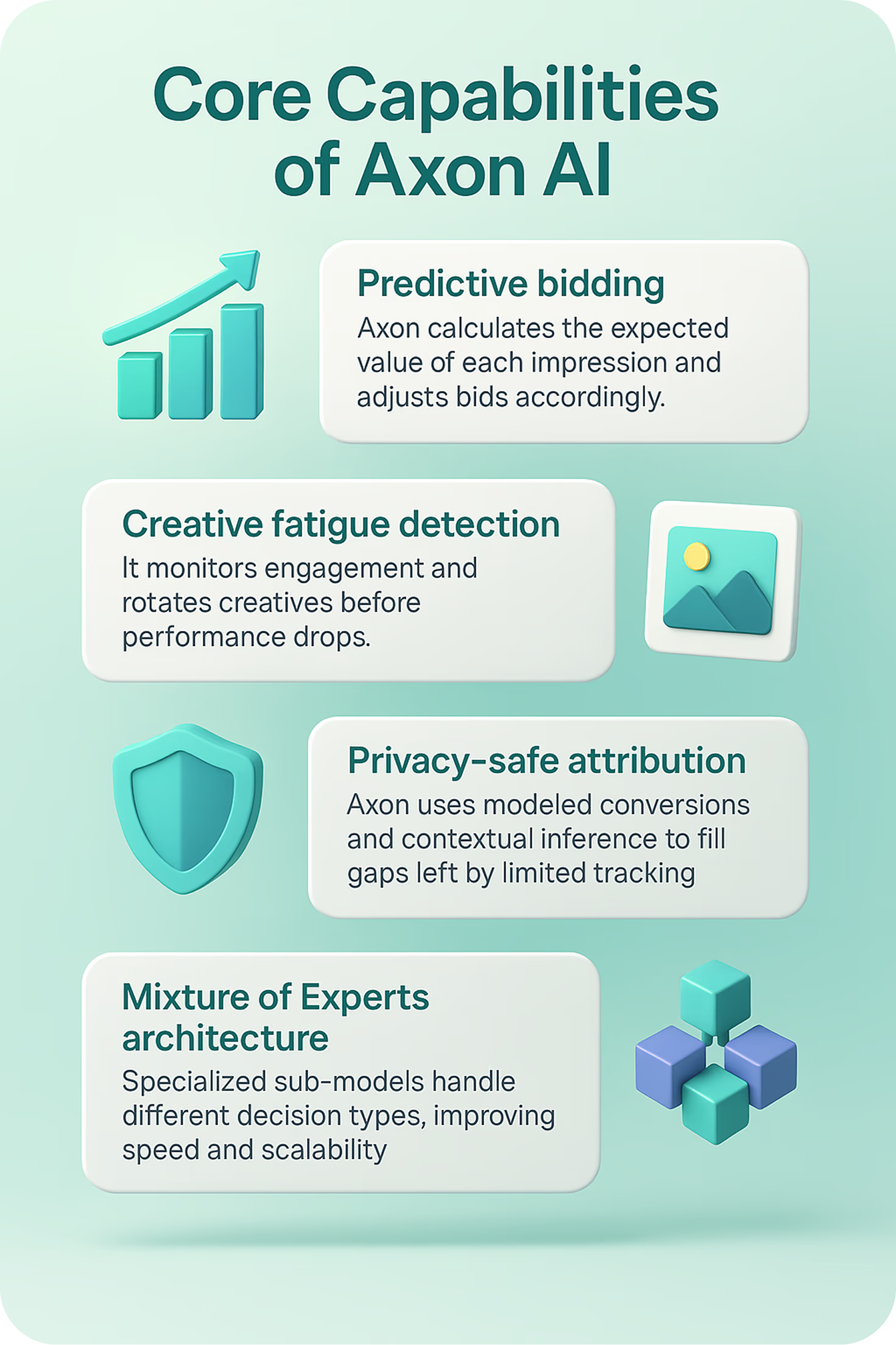
Machine learning based ad platforms - like Axon by AppLovin - automates the parts of mobile optimization that are hardest to manage manually. Mobile performance can shift from hour to hour based on time of day, OS updates, or a single creative starting to fatigue. Writing and maintaining manual rules for all of that is slow and brittle. Axon reads the signals on every impression and makes the adjustments on its own. That is what keeps performance steady.
Here is how it does it:
- Predictive bidding
Axon analyzes device, time, session depth, pixel or SDK history, and other contextual data to estimate how likely an impression is to convert. It bids more for high intent users and less for low intent traffic. - Automated targeting
Axon does not ask you to upload audience lists. It uses aggregated behavioral and contextual signals to find the right users. This keeps it compliant with privacy rules. - Real time creative rotation
Axon serves more of what is working and less of what is not. If a short video outperforms a static image, it will shift delivery toward that asset automatically. - Signal resilient attribution
Axon ingests pixel data for web, SDK events for apps, and SKAN postbacks for iOS. It is built to keep optimizing even when data is delayed or aggregated.
Because all four steps happen continuously, the system can react faster than a human operator watching reports. That is the main advantage of using a platform that was built around prediction instead of one that only executes static campaigns.
Best Practices for Mobile Ad Optimization
Automation is the end goal but it does not remove the need for good inputs. If you feed platforms like Axon an unrealistic goal, partial signals, and one creative, you will get modest results. If you feed it a true objective, a full event setup, and several creative variations, the model can learn fast and scale. Treat setup as data onboarding, not a box to check.
To get the most out of Axon:
- Set a goal that reflects you business objectives.
- Ensure all conversion signals are triggering on product, cart, checkout, and thank you pages
- For apps, send post install events through SDK and SKAN
- Upload multiple creatives and refresh every 1–2 weeks
- Monitor performance by creative to feed the next round
When you work this way, you and the system are doing different jobs. You handle strategy, goals, and inputs. If it wasn’t clear, we’re big fans of Axon because it handles delivery, bidding, and creative selection allowing you to run more campaigns without losing quality.
Common Pitfalls to Avoid
Most mobile campaigns that underperform are not failing because mobile is too competitive. They are failing because the inputs do not match how mobile actually works. Creatives built for desktop get ignored in vertical feeds. Landing pages that are slow on mobile networks cause users to drop before the conversion event fires. Campaigns optimized for installs do not produce revenue even though costs look good. These are all fixable.
Watch out for:
- Creatives that are not mobile first (too much text, not vertical, unclear CTA)
- Landing pages or sites that load slowly on mobile networks
- Campaigns optimized for the wrong goal
- Missing purchase values or missing key events in the pixel or SDK setup
- Trying to layer manual audiences on top of an automated system
Cleaning these up gives Axon, or any other automated platform, cleaner data to work with. Once the data is clean, the model can make better predictions and your cost metrics become more stable.
From Principles to a Working System
Mobile ad optimization in 2026 is about controlling the inputs you do have instead of getting stuck on the ones you do not.
You cannot control SKAN delays, Meta opacity, or every new privacy rule. You can control what events you send, which objectives you pick, how fast your mobile pages load, and how many creative options you give the ad platform.
Start there. Once that is in place, a system like Axon can take over the hourly and daily decision making that humans cannot keep up with. That is how you keep mobile ROI consistent even while the ecosystem keeps changing. Explore more about AXON.
Learn how to make UGC video ads that actually convert on Axon by AppLovin. Covers ideal length, hook structure, caption strategy, and the creative patterns driving real ROAS in 2026.

Discover how mobile incrementality testing in 2026 proves true ad impact. Learn from Axon case studies showing higher iROAS, stronger LTV, and halo effects across channels.