

Mobile Incrementality Testing in 2026: How to Measure True Ad Impact

Mobile Incrementality Testing in 2026: How to Measure True Ad Impact
Mobile advertising has entered a new era. In 2026, marketers face a paradox: campaigns are more sophisticated than ever, yet measuring their true impact has never been harder. Privacy regulations, fragmented customer journeys, and rising acquisition costs have eroded the reliability of traditional attribution models. Last‑click reporting, once the industry’s default, now feels like looking at the world through a keyhole... You see the conversion, but miss the bigger story.
That’s why incrementality testing has become the gold standard for advertisers who want clarity. Instead of asking “Did this ad get clicked?”, incrementality asks “Would this conversion have happened without the ad?” It’s a subtle but profound shift, and it’s reshaping how brands plan, measure, and scale their mobile campaigns.
What Is Mobile Incrementality Testing?
Incrementality testing is a measurement method designed to isolate the true lift an ad campaign generates. It doesn’t just count conversions; it distinguishes between conversions that were influenced by ads and those that would have happened anyway.
Why Incrementality Matters in 2026
The need for incrementality testing has only intensified as mobile advertising enters a new phase of complexity. Advertisers are no longer satisfied with surface‑level metrics; they want proof that campaigns are creating real growth.
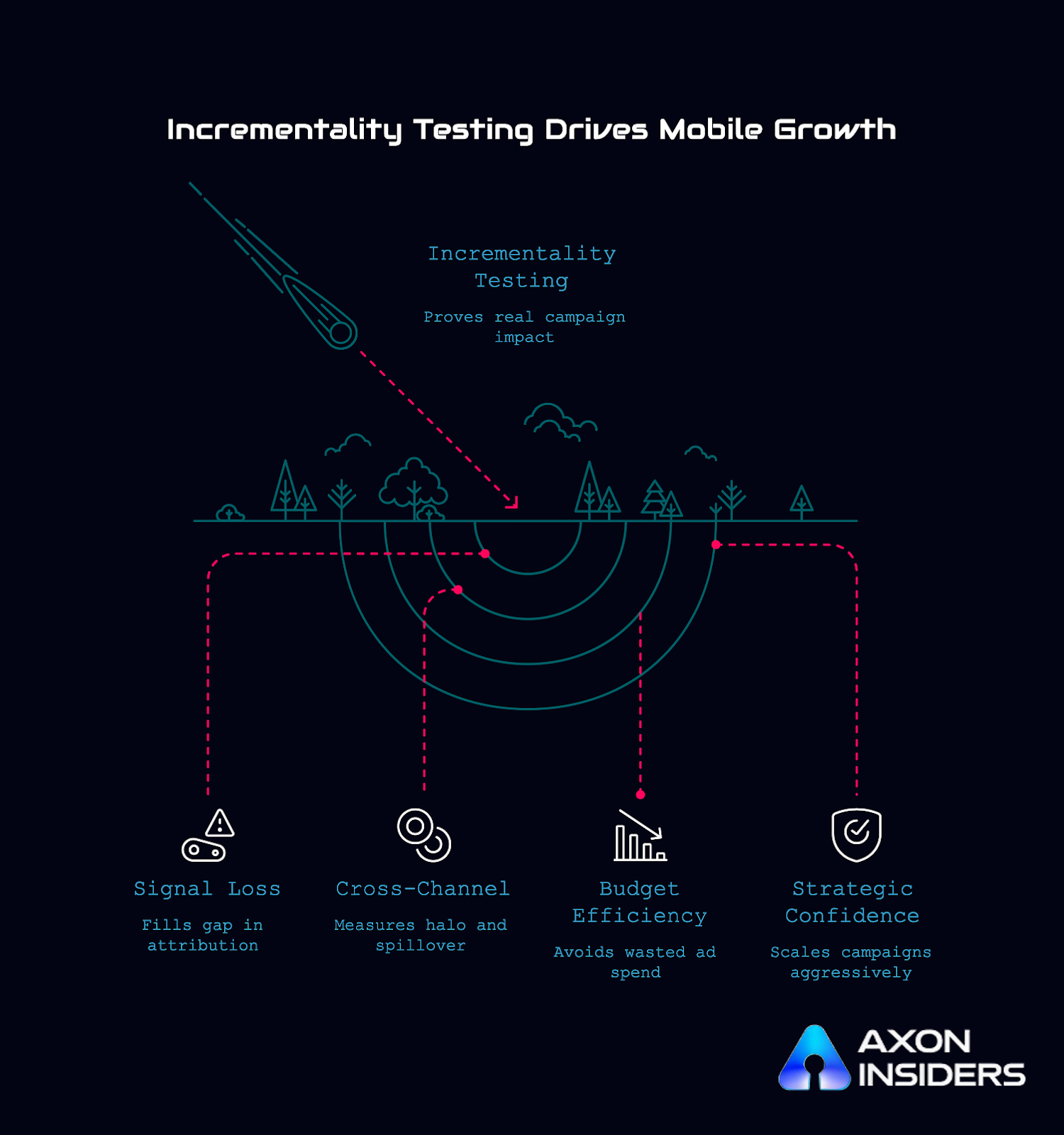
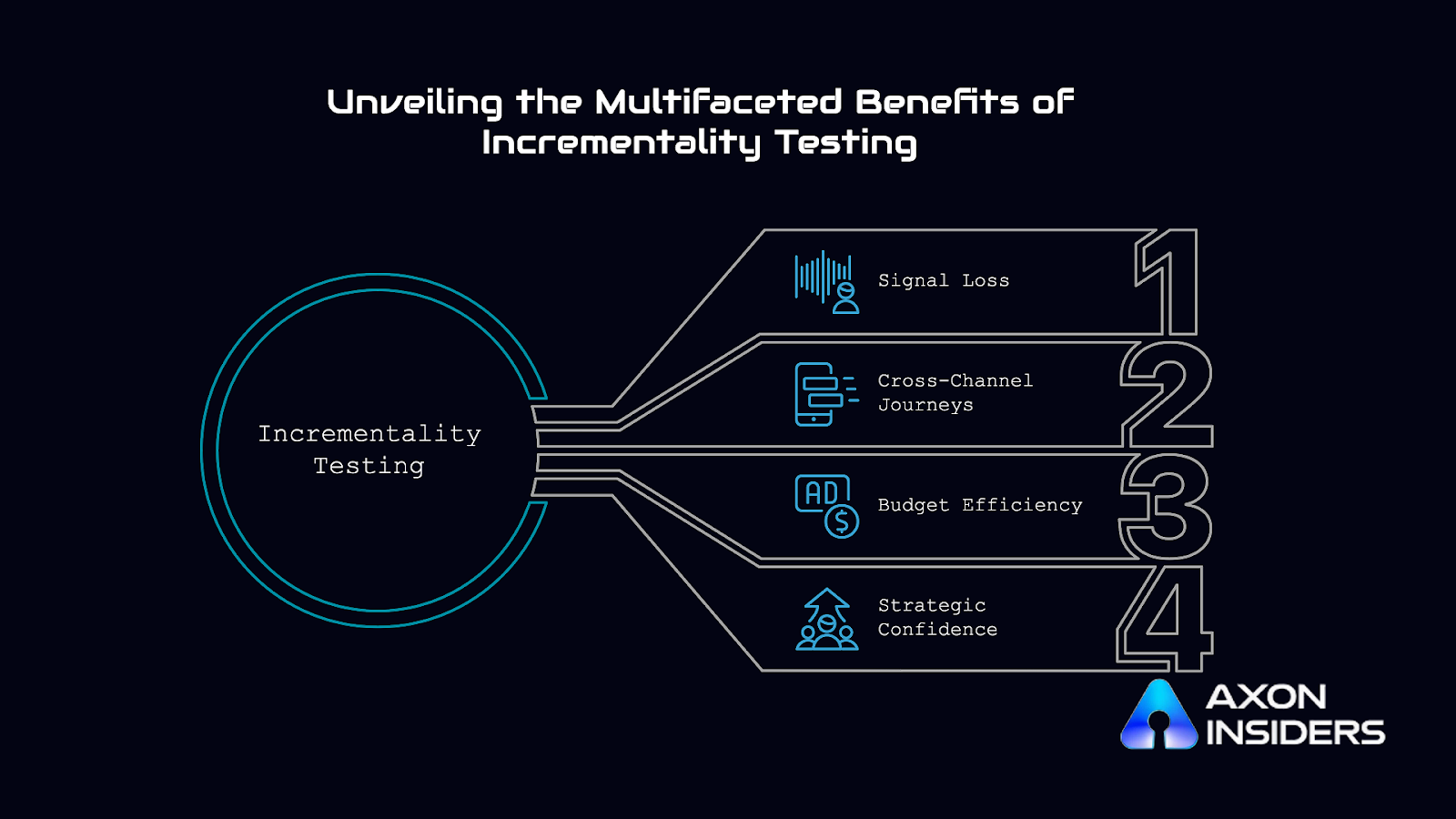
- Signal Loss: With ATT, GDPR, and the decline of device‑level identifiers, deterministic attribution has become unreliable. Marketers can no longer depend on a clean trail of clicks to prove impact. Incrementality testing steps in to fill that gap, using modeled conversions and aggregated signals to show lift even when direct tracking is impossible.
- Cross‑Channel Journeys: Today’s customers rarely follow a straight line. They might discover a product in a mobile ad, research it on a brand’s website, and ultimately purchase through Amazon or a retail partner. Without incrementality testing, much of this influence is invisible. By measuring halo effects and spillover, advertisers can finally see how mobile ads spark intent across the entire ecosystem.
- Budget Efficiency: Rising acquisition costs mean every dollar counts. Incrementality testing helps advertisers avoid wasted spend on conversions that would have happened anyway. Instead of inflating ROAS with non‑incremental sales, brands can focus budgets on campaigns that truly move the needle.
- Strategic Confidence: Perhaps the most important benefit is confidence. When incrementality testing proves that lift is real, brands can scale campaigns aggressively without fear of wasted spend. It’s the difference between scaling on instinct and scaling with conviction.
In short, incrementality testing is no longer a “nice to have.” It’s the foundation for growth in 2026, giving advertisers clarity in a landscape where traditional attribution has lost its footing.
The Core Framework of Mobile Incrementality Testing
Incrementality testing isn’t one rigid method. It’s a structured approach that helps advertisers determine whether their campaigns are truly driving growth or simply capturing existing demand. When designed and interpreted correctly, it gives marketers confidence that their spend is working as intended.
For example: Geo-lift testing provides the core experimental methodology. Holdout groups form the control structure within that design. From there, metrics like incremental ROAS measure efficiency, while outcomes such as halo effects reveal broader channel impact.
Understanding how these elements fit together is essential for measuring true incremental growth.
- Core Methodology: Geo-Lift Testing
Geo-lift tests measure incremental impact by comparing performance between exposed regions and control regions. For example, a campaign may run in California while Texas serves as a control. The difference in outcomes between the two regions represents the incremental lift driven by advertising. This approach allows marketers to measure causal impact at a market level under real-world conditions.
- Foundational Design Component: Holdout Groups
Holdout groups are the control component within an incrementality test. They are intentionally withheld from exposure so their outcomes can be compared against exposed groups. Whether implemented at the geo level or audience level, holdouts create the baseline needed to isolate incremental impact. Without a holdout group, lift cannot be reliably measured.
- Core Metric: Incremental ROAS (iROAS)
Once incremental lift is measured, advertisers must evaluate efficiency. That’s where incremental ROAS (iROAS) comes in.
iROAS calculates return on ad spend using only incremental conversions, the conversions that would not have occurred without advertising.
Traditional ROAS often blends organic and paid conversions together, overstating performance. iROAS removes that noise and reveals true campaign profitability. For growth teams, this is the difference between apparent performance and actual incremental growth.
- Additional Measurable Outcome: Halo Effects
Beyond direct lift, geo-lift studies can also uncover halo effects, the spillover impact advertising has on other channels.
A customer may see an ad on Axon, then purchase later on Amazon or through a retail partner. These conversions are often missed by last-click attribution models but can be captured in a properly structured geo-lift experiment.
Halo effects reveal the broader influence of advertising across today’s fragmented customer journey. Ignoring them risks undervaluing total campaign impact.
Future Trends in Mobile Incrementality Testing
Looking ahead, several trends are shaping how incrementality will evolve in 2026 and beyond:
- Privacy‑Safe Measurement: As regulations tighten, reliance on modeled conversions and aggregated signals will grow.
- AI‑Driven Testing: Machine learning is making it possible to predict incremental lift with fewer data points. Instead of waiting weeks for a geo‑lift test to conclude, AI models can surface early signals of incrementality, speeding up decision‑making.
- Integration With MMM: Marketing Mix Modeling (MMM) is being combined with incrementality to create holistic measurement frameworks. Together, they allow advertisers to see both the macro impact of spend and the micro lift of individual campaigns.
- Cross‑Channel Attribution: Incrementality is expanding beyond mobile to measure impact across DTC sites, marketplaces, and retail partners. This integration ensures advertisers capture the full value of campaigns, not just direct conversions.
Incrementality is becoming less of a siloed test and more of a strategic framework for growth. In 2026, the most successful advertisers will be those who treat incrementality not as a one‑off experiment, but as a continuous practice woven into every campaign decision.
Axon Case Studies: Incrementality Testing in Action
Theory is useful, but practice is where incrementality proves its worth. WorkMagic’s study of Axon by AppLovin offers a rare window into how incrementality testing reveals hidden value in mobile campaigns. These insights show not only the numbers, but the story behind how advertisers moved from cautious testing to confident scaling.
- Insight 1: Hockey‑Stick Growth
Between Q1 and Q3 2025, the share of WorkMagic clients running Axon campaigns grew 20%, while Axon’s share of total ad spend surged 152%. Incrementality testing was the turning point: once advertisers saw proof that Axon was driving incremental lift, they didn’t just maintain spend, they scaled aggressively.
This trajectory mirrors Axon’s broader evolution. Advertisers who once treated Axon as a side test now rely on it as a core acquisition channel. Incrementality gave them the confidence to move from “let’s try this” to “let’s bet big.”
- Insight 2: Efficiency Against Other Channels
Axon’s ad units are embedded in high‑engagement mobile environments, and the efficiency metrics stand out:
- Lowest CPC: $0.70, the most efficient among all channels.
- Highest CTR: 5.2%, showing unmatched engagement.
On paper, these numbers look impressive. But incrementality testing confirmed they weren’t just vanity metrics. The low CPC translated into real incremental conversions, and the high CTR reflected genuine intent rather than empty clicks. Even the premium CPM was validated: advertisers were paying more per impression, but those impressions were disproportionately driving incremental lift.
For marketers, this was a revelation. Efficiency was about quality traffic that moved the needle.
- Insight 3: Incremental ROAS vs. Last‑Click
WorkMagic found that iROAS was ~12% higher than last‑click attribution reported. In fact, 67% of brands experienced underreporting of Axon’s value when relying only on click‑based attribution.
This gap underscores why incrementality is essential. Last‑click attribution misses cross‑channel influence, the customer who sees an Axon ad, then later buys on Amazon or a retail site. Incrementality testing captured that hidden impact, revealing that Axon was driving more value than dashboards suggested.
For advertisers, this was a wake‑up call. Without incrementality, they were undervaluing a high‑performing channel. With it, they saw the full picture and scaled accordingly.
- Insight 4: The Halo Effect
Axon’s hidden superpower is its halo effect. On average, 26% of incremental orders happened outside DTC stores, such as Amazon and Walmart.
This proves that Axon campaigns spark action beyond direct conversions. Customers exposed to Axon ads often purchase later in other channels, a value invisible to last‑click attribution. Incrementality testing made this spillover measurable, showing advertisers that Axon wasn’t just driving DTC sales, it was fueling the entire commerce ecosystem.
For brands, the halo effect validated what intuition had long suggested: ads don’t just drive clicks, they spark intent that shows up everywhere customers shop.
- Insight 5: High‑Value New Customer Growth
Incrementality testing also revealed the quality of Axon’s acquisitions, new customers had an AOV 6.5% higher than the average Axon order.
This matters because not all new customers are equal. Incrementality testing validated that Axon wasn’t just recycling existing buyers or chasing low‑value acquisitions. It was driving high‑value new customers who spent more and contributed meaningfully to long‑term growth.
For advertisers, this shifted the narrative. Axon wasn’t just a channel for volume; it was a channel for quality acquisition.
- Insight 6: Long‑Term LTV Impact
Incrementality testing captured not just immediate lift, but long‑term customer value:
- At 90 days: Axon‑acquired customers had 2% higher LTV.
- At 365 days: Axon-acquired customers had an indexed LTV 5% higher than the overall average
- 79% of advertisers saw higher LTV from Axon compared to other platforms.
This shows that Axon’s impact compounds over time. Customers acquired through Axon don’t just convert once... they stick around, spend more, and deliver higher lifetime value. Incrementality testing gave advertisers the confidence to see beyond short‑term ROAS and invest in sustainable growth.
Case Study A: True Classic
True Classic, a leading menswear brand, had already built a reputation for sharp, creative and strong direct‑to‑consumer sales. But when it came to scaling paid media, the team was cautious. They knew that last‑click attribution often underreports value, and they weren’t willing to pour six‑figure budgets into a channel without proof that it was driving incremental growth.
That’s where incrementality testing came in. By running controlled tests, True Classic discovered that Axon’s impact was far greater than dashboards suggested:
- 3x higher iROAS than last‑click reporting indicated, proving that Axon was driving conversions that would have been invisible in traditional attribution.
- 56% of Axon sales came from new customers, showing that the platform wasn’t just recycling existing buyers but actively expanding the customer base.
- A measurable 3.14% halo lift on Amazon orders, validating that Axon ads were sparking intent that carried over into marketplace purchases.
For True Classic, these insights were transformative. Incrementality testing gave the team confidence that Axon was delivering real, measurable growth. Armed with clarity, they scaled spend to $100k+ per day, turning Axon from a test channel into a cornerstone of their acquisition strategy.
Case Study B: immi
immi, a fast‑growing food brand known for its better‑for‑you instant ramen, faced a different challenge. The team suspected that click‑based reporting was missing much of Axon’s impact, especially across marketplaces like Amazon, where attribution is notoriously difficult. But suspicion wasn’t enough... they needed proof.
A geo‑lift test provided that proof. By comparing regions exposed to Axon ads with control regions, immi uncovered hidden value that last‑click attribution had ignored:
- 40.7% of Axon’s impact came from halo orders on Amazon, showing that ads were driving intent that translated into marketplace purchases.
- 46% lower iCPA compared to last‑click attribution, proving that Axon was far more efficient than dashboards suggested.
- After validating these results, immi scaled Axon investment 4.2x, driving significant revenue growth.
For immi, incrementality testing turned caution into conviction. What began as a hypothesis — that Axon was undervalued became a data‑backed reality. With proof in hand, the team confidently expanded spend, knowing that Axon was fueling both direct sales and marketplace growth.
Common Challenges in Mobile Incrementality Testing
While powerful, incrementality testing requires rigor and thoughtful execution. Running meaningful experiments demands discipline, statistical care, and organizational alignment.
- Experimental Discipline: Incrementality testing is a causal framework, not a reporting tactic. It requires clearly defined exposure and control groups, stable budgets during the test window, and minimal mid-test optimizations that could contaminate results. Without experimental discipline, conclusions can quickly become unreliable.
- Statistical Design: Even strong test concepts fail if they are underpowered or poorly structured. Sample sizes must be large enough to detect meaningful lift, holdout allocation must be thoughtfully designed, and external factors such as seasonality or promotions must be accounted for. Sound statistical planning is essential.
- Organizational Alignment: Incrementality results can challenge existing attribution narratives. Teams accustomed to platform-reported ROAS may struggle with results that look different from deterministic reporting. Interpreting lift correctly requires a shift toward causal measurement and executive buy-in on what success truly means.
- Complex Setup: Geo-lift and holdout-based experiments demand careful planning and statistical rigor. Selecting appropriate control groups, ensuring sufficient power, and interpreting confidence intervals correctly all require expertise. Many advertisers underestimate this complexity until they conduct their first properly structured test.
Recommendations for Advertisers
Incrementality testing is powerful, but its value depends on how advertisers put it into practice. Based on WorkMagic’s findings and Axon’s performance data, here are four recommendations to guide growth teams in 2026:
- Test Before You Scale
Run controlled incrementality tests before committing large budgets. Geo‑lift experiments, holdout groups, or marketplace halo studies can reveal whether a campaign is truly driving incremental lift. This upfront discipline prevents wasted spend and gives teams confidence to scale. Think of it as building a foundation: once you know the lift is real, you can safely layer on more budget without fear of inflated metrics.
- Measure What Matters
Traditional ROAS often hides the truth. Instead, focus on iROAS (incremental return on ad spend) and halo effects to capture the full value of campaigns. These metrics show whether ads are creating new demand and influencing purchases across channels like Amazon or retail partners. By measuring what matters, advertisers stop chasing vanity clicks and start tracking the outcomes that drive sustainable growth.
- Optimize With Incrementality Data
Incrementality isn’t just for reporting, it should feed back into optimization. Use incrementality insights to guide Axon’s predictive bidding system, ensuring spend flows toward impressions that deliver the highest incremental value. Over time, this creates a feedback loop: campaigns get smarter, budgets get more efficient, and growth compounds.
- Balance Prospecting and Retargeting
Prospecting campaigns bring in new customers, while retargeting campaigns nurture them into loyal repeat buyers. The most effective advertisers run both in tandem, creating a full‑funnel strategy that balances acquisition and retention. Incrementality testing validates this balance, showing how prospecting fuels growth and retargeting maximizes lifetime value. Together, they form a growth engine that’s both scalable and sustainable.
Conclusion
In 2026, mobile incrementality testing is no longer optional — it’s essential. Traditional attribution models underreport value, while incrementality reveals the true impact of campaigns.
WorkMagic’s study of Axon by AppLovin shows how incrementality testing uncovers hidden growth: higher ROAS, stronger LTV, and halo effects across channels. For advertisers, the message is clear: test incrementality, trust the data, and scale with confidence.
Incrementality testing is reshaping mobile advertising, and Axon is at the center of that shift. If you want early access to insights, case studies, and strategies from brands already scaling with confidence, AxonInsiders is your next step.
AxonInsiders is a community built for growth‑minded advertisers:
- Get exclusive data and benchmarks from WorkMagic studies.
- Learn how top brands are running prospecting and incrementality tests.
- Access playbooks for scaling campaigns across DTC, marketplaces, and retail.
- Connect with peers who are redefining customer acquisition in 2026.
👉 Join AxonInsiders today and be part of the movement that’s proving true ad impact, one incremental lift at a time.
FAQs
- What is mobile incrementality testing? It’s a measurement method that isolates the true lift of ad campaigns, showing whether conversions were driven by ads or would have happened anyway.
- Why is incrementality testing important in 2026? With privacy restrictions and signal loss from ATT and GDPR, traditional attribution is unreliable. Incrementality testing provides clarity and confidence in campaign performance.
- How does Axon use incrementality testing? Select Axon campaigns have been validated through WorkMagic studies revealing higher incremental ROAS, measurable halo effects across marketplaces, and stronger long‑term customer value.
- What results did True Classic see with incrementality testing? True Classic found 3x higher iROAS than last‑click suggested, 56% of sales from new customers, and a halo lift on Amazon orders, enabling them to scale to $100k+ daily spend.
How did immi benefit from incrementality testing? immi uncovered a 40.7% halo effect on Amazon, achieved 46% lower iCPA compared to last‑click attribution, and scaled Axon investment 4.2x, driving significant revenue growth.

Learn how to make UGC video ads that actually convert on Axon by AppLovin. Covers ideal length, hook structure, caption strategy, and the creative patterns driving real ROAS in 2026.
Discover how mobile incrementality testing in 2026 proves true ad impact. Learn from Axon case studies showing higher iROAS, stronger LTV, and halo effects across channels.